The former HMS Pembroke has entered service with the Romanian Navy as Kaptan Constantin Dumitrescu, bolstering NATO mine countermeasure capacity in the Black Sea.
The Romanian Navy has formally taken over the Royal Navy's old Sandown-class minehunter, HMS Pembroke (M107), and renamed it Kaptan Constantin Dumitrescu (M271). The move gives Romania's navy a big boost in the Black Sea, which is strategically important and where floating mines have been a hazard to commercial shipping since the start of the Russia–Ukraine war.
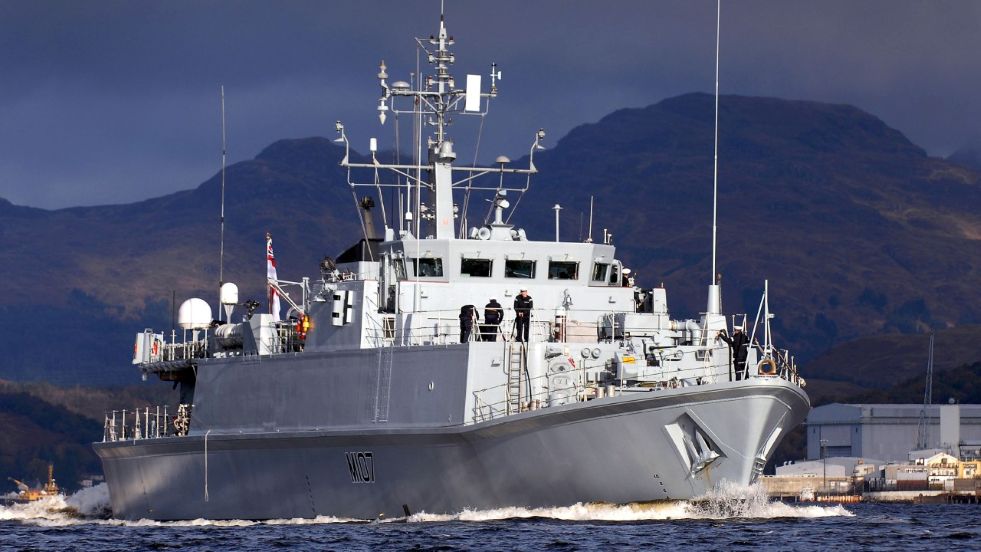
Before the ship left for Romania, there was a handover ceremony at Rosyth, Scotland. As part of the UK's fleet modernisation effort, obsolete mine countermeasure ships have been decommissioned and either dismantled or sold to ally navies.
The Sandown-class minehunter is designed for long missions, especially deep-water minehunting, and can go more than 2,500 nautical miles without stopping. With high-resolution sonar, it can find mines and unexploded bombs on the bottom with great accuracy. The ATLAS Seafox mine removal equipment or well qualified naval divers get rid of threats.
Drifting mines in the Black Sea, some of which were knocked loose during fighting, have stopped grain shipments. This has affected food prices throughout the world and diplomacy during the conflict. Their clearance has become a priority for NATO and coastal states, making Romania’s new acquisition a timely reinforcement.
Romania has long sought to strengthen its Black Sea fleet, with scenarios even suggesting future purchases of vessels such as Türkiye’s P1220 Akhisar offshore patrol vessel. However, minehunter procurement is complicated by regional security agreements, particularly the Montreux Convention, which governs naval passage to the Black Sea.
The Convention’s Article 19 allows Black Sea littoral states that are neutral in wartime to transit their own warships through the Turkish Straits, subject to peacetime tonnage restrictions. As Romania is both a coastal state and not a party to the conflict, it can freely move Kaptan Constantin Dumitrescu into the Black Sea under its own flag.
On the other hand, Ukraine is now at war and can't bring in new warships from beyond the Black Sea. This limitation recently stopped the transfer of two ex-Royal Navy Sandown-class minehunters, HMS Shoreham (now called Cherkasy) and HMS Grimsby (now called Chernihiv), which were given to the UK–Norway-led Maritime Capability Coalition.
Despite Ukrainian crews being trained, Türkiye enforced the Convention and denied their passage.
Turkiye, Bulgaria and Romania have established Mine Countermeasures Task Group to keep Black Sea clean.

Any impact on Montreux?
As the US has organised several attempts to undermine the Convention in the past, TurDef questions whether Romania could bring a minehunter into the Black Sea and then sell it to Ukraine. Even while Montreux's language doesn't say it's against the law, doing something like that would go against its spirit and cause considerable diplomatic backlash from Türkiye, Russia, and maybe even NATO itself. Also, any ship flying the Ukrainian flag would not be able to leave the Black Sea for repairs or upgrades, which would make it less useful in the long run.
For now, Kaptan Constantin Dumitrescu will sail under the Romanian flag. This will help NATO deal with mine threats in a maritime theatre where security, diplomacy, and treaty law are just as important as the ships themselves.
Author: Özgür Ekşi