France’s influence in Africa wanes as Togo considers joining the Alliance of Sahel States (AES), signalling a shift in regional dynamics and security policies.
The political shift gained momentum after the military coup in Niger in 2023. France was forced to withdraw its uranium mines and military bases from the country. At the time, France argued that its withdrawal would undermine counter-terrorism efforts. However, following Niger, Mali, and Burkina Faso also expelled France, citing dissatisfaction with France’s role in the region. These nations subsequently left the ECOWAS bloc, which they perceived as a tool of French influence, and formed the Alliance of Sahel States (Alliance des États du Sahel /AES).
In a move to counter France’s counter-terrorism narrative, Niger’s Defence Minister Salifou Mody announced on state television that the three-member alliance would soon deploy a 5,000-strong joint military force in the Sahel region. Minister Mody assured the force would “soon be visibly operational in the field.”
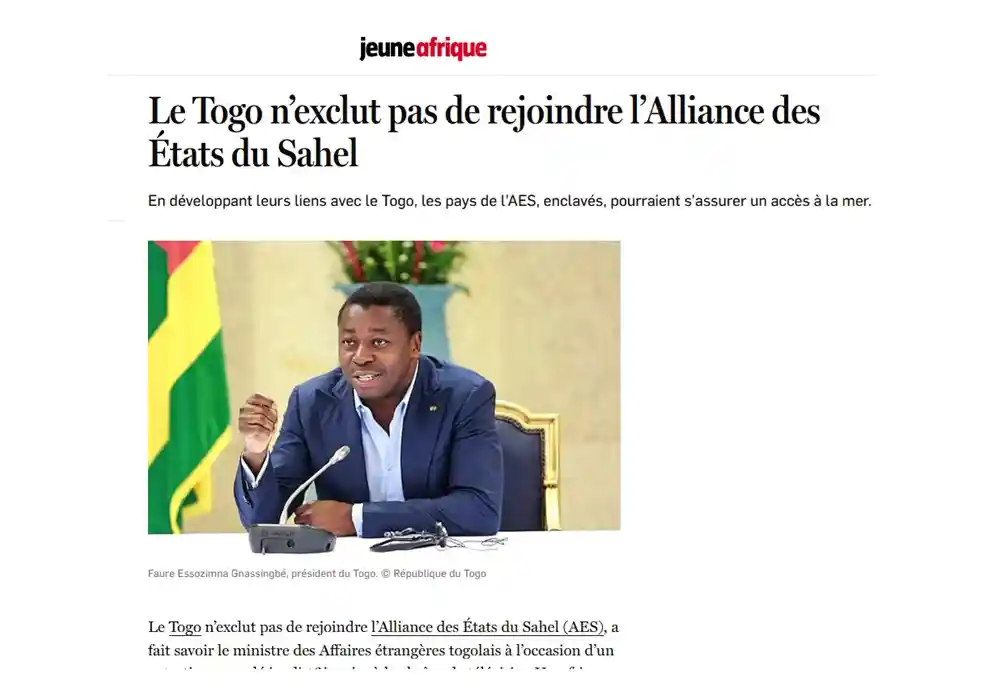
Meanwhile, discussions about a fourth member joining the AES have surfaced. Togo’s Foreign Minister, Robert Dussey, hinted at this possibility during an interview with Voxafrica television. He stated that any decision to join the alliance would require parliamentary approval and the consent of President Faure Gnassingbé, adding, “It’s not impossible.”
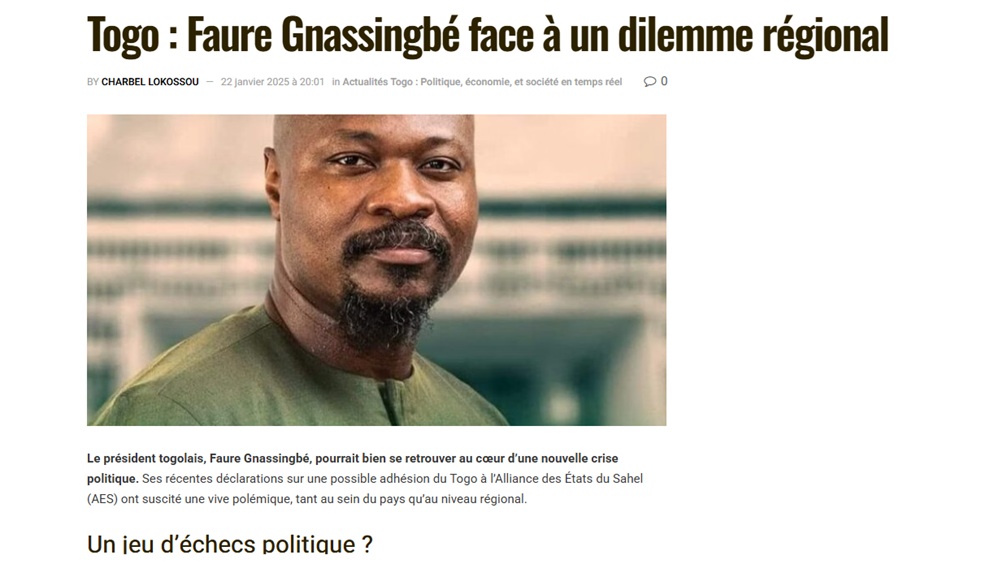
France’s stance on Togo’s potential membership was subtly reflected in France’s publications in Africa, such as afrique-sur7.fr, which criticised Togo’s human rights and democratic record, suggesting that the country might face difficulties if it proceeds with the move.
The expansion of the AES represents a significant geopolitical shift in Africa as more nations challenge France’s traditional influence and pursue independent security and political frameworks.