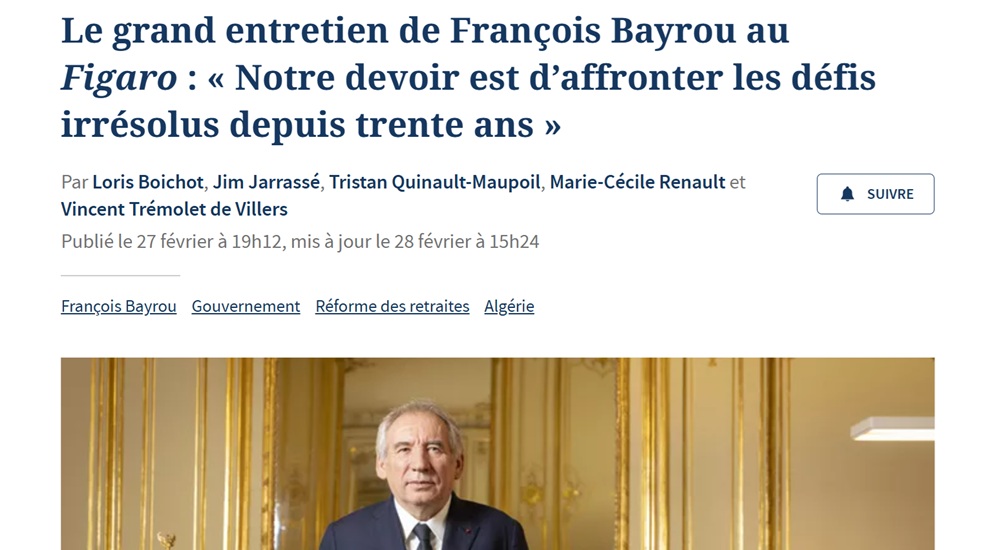
In an interview with "Le Figaro," French Prime Minister François Bayrou said military spending shouldn't be subject to the EU's public deficit restrictions. His remarks coincide with those of European Commission President Ursula von der Leyen, who recently supported more defence budgets as concerns about the US dedication to European security loom.
The Defence Budget and Fiscal Constraints of France
With the 2024 budget reaching €47.2 billion, France's defence expenditures have been rising noticeably from past years. Aiming to upgrade its armed forces and boost its military sector, the government has set even further hikes for 2025. However, these expenses coincide with France being under European Union financial monitoring.
Public finance rules set by the European Union dictate that member states maintain their national debt under 60% of GDP and public deficit below 3 per cent of GDP. With its public deficit anticipated to hit 6 per cent of GDP, France and seven other EU nations have been subject to the EU's too-ambitious deficit process. Although the French government wants it to be 5.4 per cent in 2025, defence expenditure is still a major issue in budgetary talks.
Leaders of France and the EU Demand Change
In an interview with the Financial Times, French President Emmanuel Macron has been outspoken about the need to change the EU's fiscal policies, which he regards as "obsolete." Bayrou strengthened this point of view by saying France has a strategic edge because it has made defence expenditures unlike those of other EU countries.
At the Munich Security Conference, Ursula von der Leyen argued that Europe is entering an extraordinary time that calls for relaxing deficit restrictions on military expenditures. During the COVID-19 epidemic, the EU had already relaxed its budgetary limits so that member states could help their own economies.
France will probably advocate financial flexibility in military expenditures as NATO demands grow, particularly following the fresh requests for European countries to raise their defence spending.