TUSAŞ’s Hürjet Advanced Trainer/LCA’s first prototype has reached a speed of Mach 1.2, pushing through the sound barrier successfully as a new milestone.
After nearing the speed of sound at Mach 0.9, Hürjet’s first prototype successfully broke the sound barrier by reaching the speed of Mach 1.2. This makes Hürjet the first Turkish aircraft to break the sound barrier.
Hürjet was designed to reach a maximum speed of Mach 1.4, and the test might be the last one before the eventual maximum speed flight test.
Supersonic Flight 101
When aircraft reach supersonic speeds, the behaviour of the airflow experiences drastic changes when compared to subsonic flow. Approaching speeds faster than sound causes shockwaves with intense pressure and drag to appear around the airframe, which is among the major challenges of designing supersonic aircraft.
Just before the aircraft reaches the speed of sound, shockwaves with large pressure changes cause skyrocketing in drag, but there is a steady dropoff shortly after reaching the speed of sound. The envelope where this phenomenon occurs is called the transonic region. Most supersonic aircraft are preferred with maximum speeds beyond the higher end of the transonic region for less drag, and Hürjet is one of them.
Hürjet, the New Player in the Advanced Trainer/LCA Market
Hürjet's development was mainly launched with the goal of replacing the T-38 Talon fleet of advanced trainers in the Turkish Air Force and providing a light combat aircraft that can be operated more easily than full-sized fighters.
After the mark of the second prototype's first flight, the first potential customer of Hürjet turned out to be a rather unexpected one: Spain. Spain, seeking to replace its ageing F-5s used as advanced trainers, has shown notable interest in Hürjet. Both Turkiye and Spain have had an exchange of visits to discuss the acquisition of Hürjet, and a milestone was reached with the signing of an MoU on cooperation towards the end of 2024.
Another important development for Hürjet is the super-incentive worth ₺9.5 billion for the TOMTAŞ facility set to start with a capacity of 12 airframes per year. However, the capacity will be gradually increased to 24 and 48 depending on total customer demand for Hürjet.
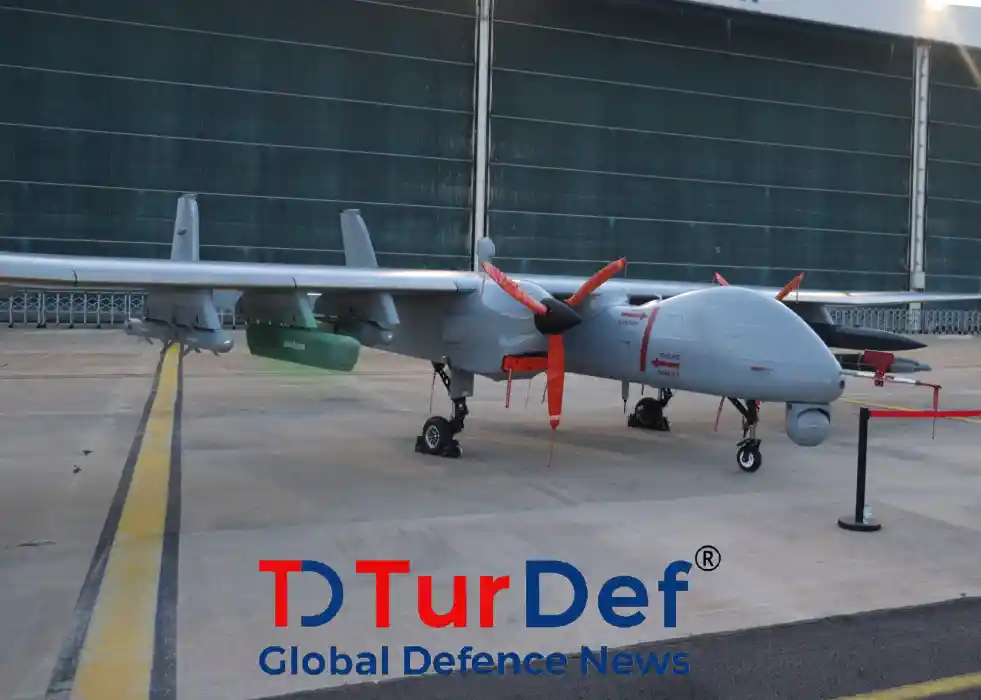
Beyond the conventional developments, Hürjet was tested in a unique context when ANKA-III UCAV's first prototype flew alongside the advanced trainer, understood to be a preparation for the OKU MUM-T complex being developed by TUSAŞ.
Author: Kaan Azman
Editor: Özgür Ekşi