Tokyo expands its UAV capabilities for ISTAR missions with Heron MK II trials while boosting US Made SeaGuardian acquisitions for maritime surveillance.
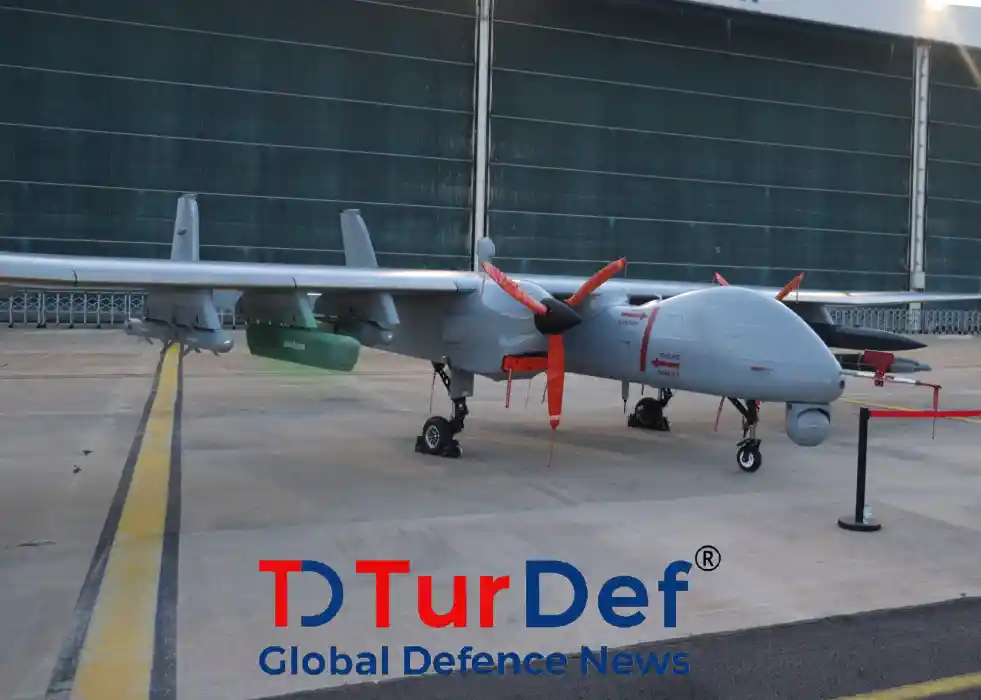
An Israeli-made Heron MK II UAV has been spotted conducting a test flight at Shirahama Airport, operated by Kawasaki Heavy Industries and equipped with electronic surveillance payloads, including under-wing ESM antennas.
The Heron MK II is a MALE-class unmanned aerial vehicle designed for ISTAR missions, with configurations available for electronic warfare, ELINT and COMINT. Upgrades over the previous model include a 50% climb rate increase, top speed rising from 120 to 140 knots, maximum take-off weight from 1,200 kg to 1,350 kg, and payload from 450 kg to 470 kg. A widened fuselage allows for additional sensors.
Japan is evaluating the system to strengthen regional electronic warfare and reconnaissance capabilities, meeting the Japan Ground Self-Defence Force’s long-range surveillance needs.
Alongside the Heron evaluation, Tokyo is expanding its American-made UAV fleet. The Japan Coast Guard has operated leased MQ-9B SeaGuardian drones since October 2022, with additional flights from May 2023. Two units are on order for 2028 delivery.
The Japan Maritime Self-Defence Force selected the SeaGuardian in December 2024 for its long-endurance UAV programme, while plans are in place to acquire up to 23 units by 2028.
Japan currently operates no MQ-9 Reaper systems. However, the US Air Force’s 319th Expeditionary Reconnaissance Squadron flies Reaper missions from Kadena Air Base, Okinawa, in coordination with Japan’s defence ministry — but under US ownership and control.
Author: Özgür Ekşi