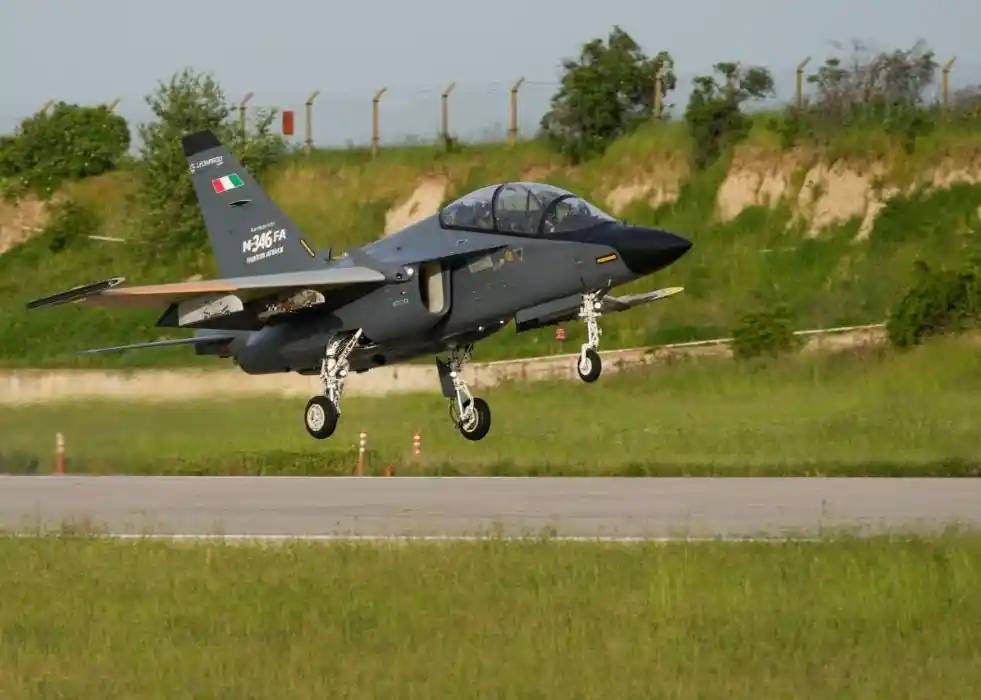
Leonardo and Baykar have completed the first live testing phase of their K-SWARM programme, carrying out autonomous formation flights between an M-346 and a Bayraktar KIZILELMA in a development that appears to push Europe’s manned-unmanned teaming efforts from concept into live practice.
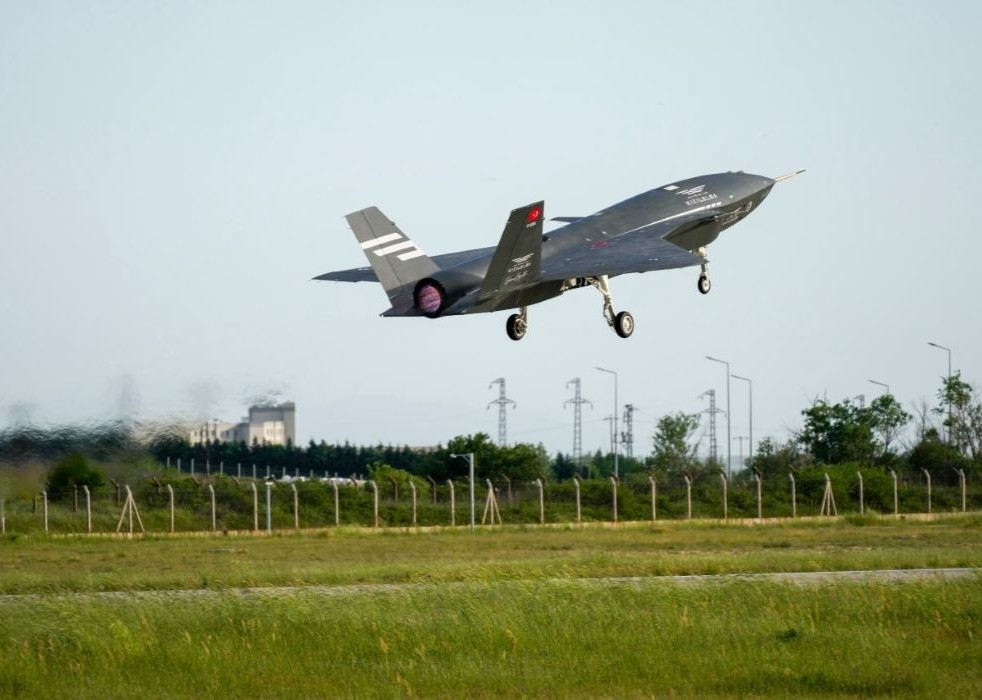
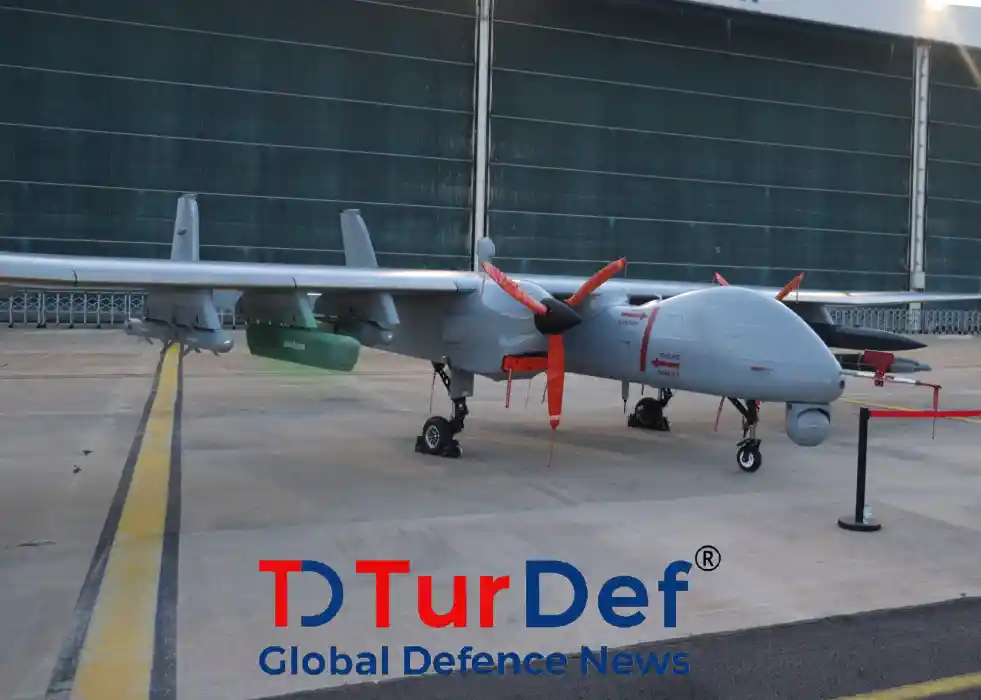
According to Leonardo, the May trials at Baykar’s Çorlu test centre involved a Leonardo-owned M-346 Fighter Attack aircraft, an Italian Air Force T-346A acting as chase aircraft and a Bayraktar KIZILELMA unmanned fighter. The company said the campaign moved K-SWARM from simulation into live operation and tested collaborative behaviours through algorithms developed for crewed-uncrewed teaming.
The trials are an obvious validation for Baykar’s KIZILELMA, but they may carry even wider significance for Leonardo. By pairing the M-346 with an already flying unmanned fighter rather than waiting for a future European loyal wingman programme to mature, the Italian company is accelerating its path into operational Manned-Unmanned Teaming (MUM-T) while also updating the role of the M-346 itself.
That second point may prove just as important as the teaming milestone. The M-346 has long been marketed as an advanced trainer and light combat platform rather than as a node in a future collaborative combat ecosystem. K-SWARM gives Leonardo a chance to present it differently: as a relatively low-cost crewed platform for managing unmanned teammates and refining the tactics, procedures and interfaces that could shape later combat-air architectures.
The shift also has implications for HÜRJET. In the trainer and light-combat market, the Turkish jet has benefited from its association with a newer and more digitally oriented combat ecosystem. Leonardo’s K-SWARM push does not make the M-346 a newer aircraft, but it does help detach it from a more traditional trainer image by linking it directly to collaborative combat and unmanned teaming.
That matters in a market where trainer and light-combat aircraft are increasingly judged not only by flight performance or syllabus suitability, but also by how credibly they can connect to future air-combat networks. HÜRJET has been positioned as part of Türkiye’s next-generation combat-air environment, and TUSAŞ has already demonstrated autonomous formation flights between HÜRJET and the ANKA-III unmanned combat aircraft. In that sense, Leonardo’s latest move touches one of the areas where HÜRJET had appeared to enjoy a narrative advantage over the M-346.
Leonardo had already signalled this direction in March, when Chief Executive Roberto Cingolani said demonstrations with KIZILELMA would begin in mid-2026 using an M-346F as the controlling aircraft. The June trials now show that the concept has moved beyond public discussion and into flight testing.
Leonardo said the campaign used a series of missions to assess algorithms, tactics and procedures developed by its avionics, flight-control and concept laboratories, while Baykar integrated smart fleet autonomy functions into the crewed-uncrewed architecture. During the sorties, KIZILELMA autonomously executed formation tasks in response to commands from the M-346 crew. The company also linked the trials to a wider digital environment involving simulation, secure communications and mission-management architecture.
For Leonardo, the attraction is clear. KIZILELMA gives the company access to a flying unmanned combat aircraft that can be used now to test control logic, tactics and pilot-machine interaction, shortening the path to a practical MUM-T architecture without waiting for a wholly European collaborative combat aircraft to emerge.
For Baykar, the benefits are also substantial. The trials place KIZILELMA inside a live programme run by one of Europe’s major combat-air companies and strengthen its profile as more than a national unmanned fighter project. They suggest that KIZILELMA is being treated not simply as a future export product or a domestic combat asset, but as a platform that can already be inserted into a broader allied crewed-uncrewed teaming architecture.
The trials therefore do more than validate KIZILELMA inside a European MUM-T framework. They also give Leonardo a tool to reposition the M-346 for a market increasingly shaped by collaborative combat and digital networking, potentially narrowing one of HÜRJET’s clearest narrative advantages in the process.
Author: Özgür Ekşi