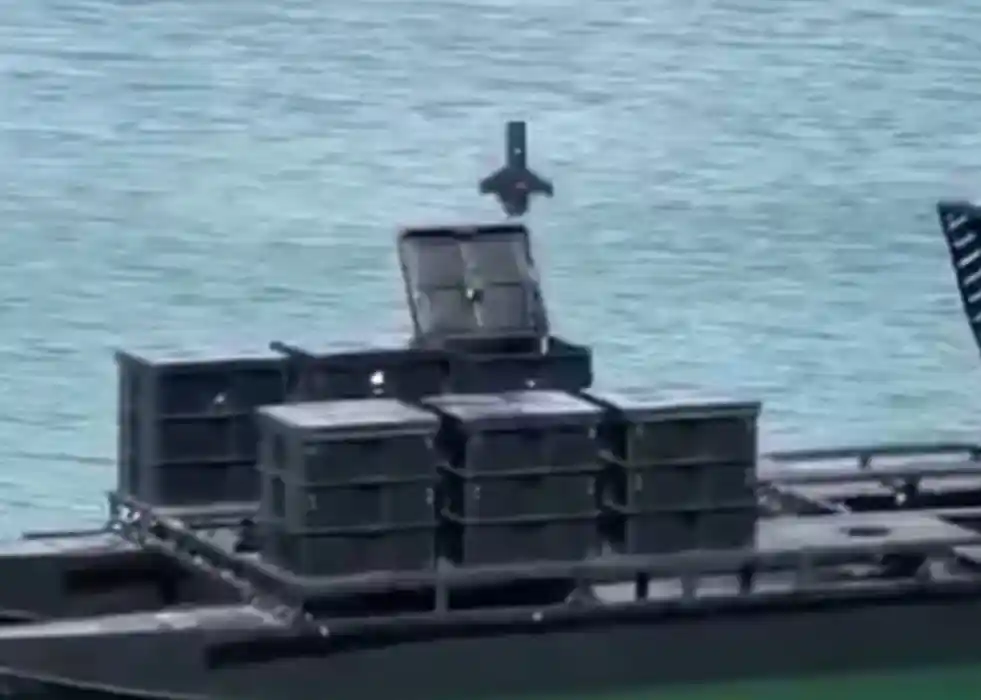
General Atomics Aeronautical Systems (GA-ASI) and the US Navy have completed a new set of flight tests to expand the MQ-9B SeaGuardian's anti-submarine warfare (ASW) mission set. These tests confirmed that the platform can carry larger sonobuoy payloads and support wide-area acoustic search from an unmanned aircraft.
On January 13, 2026, the business said that the tests confirmed a new version of the Sonobuoy Dispensing System (SDS), which included the first time that Multi-Static Active Coherent (MAC) sonobuoys were launched from an unmanned platform.
The December 2025 flight test — conducted on 17 December — included more SDS pods than previous demonstrations, effectively doubling the number of deployable sonobuoys.
In the tested configuration, SeaGuardian can carry up to four SDS pods, one on each wing hardpoint. GA-ASI states each pod can dispense either 10 “A-size” or 20 “G-size” sonobuoys, bringing the total loadout to 40–80 buoys per sortie depending on the type employed.
The key operational argument is endurance: with an endurance of more than 30 hours, MQ-9B SeaGuardian can remain on-station far longer than manned maritime patrol aircraft, potentially allowing navies to sustain acoustic search patterns with lower cost and fewer crew constraints. Data collected from deployed sonobuoys can be processed and transmitted in near real time, supporting tasking and cueing for manned assets.
However, the test does not automatically make MQ-9B a full “submarine hunter” in the traditional sense. While the aircraft can deploy and help manage an acoustic field, the complete ASW kill chain — including sustained prosecution, complex classification, rules-of-engagement decision-making, and weapon delivery — typically remains dependent on manned maritime patrol aircraft, helicopters, surface combatants and undersea sensors. In this context, SeaGuardian’s emerging role is better described as a persistent ASW ISR node that extends coverage and cueing, rather than replacing platforms such as the P-8A Poseidon.
The submarine detection challenge has long pushed maritime forces towards multiple sensing methods, from magnetic anomaly detection to radar/ESM cueing and undersea surveillance networks. However, operational limitations — particularly the requirement to keep manned aircraft continuously on-station — have increased interest in unmanned platforms that can deploy and manage acoustic fields at scale. In such concepts, platforms like SeaGuardian are intended to “hold the search area” for extended periods, enabling manned assets to be tasked more selectively for classification and prosecution.
GA-ASI stated that the ongoing testing is tied to the certification process for the SDS pod, with operational flight clearance expected from the US Navy in January 2026 following data review.
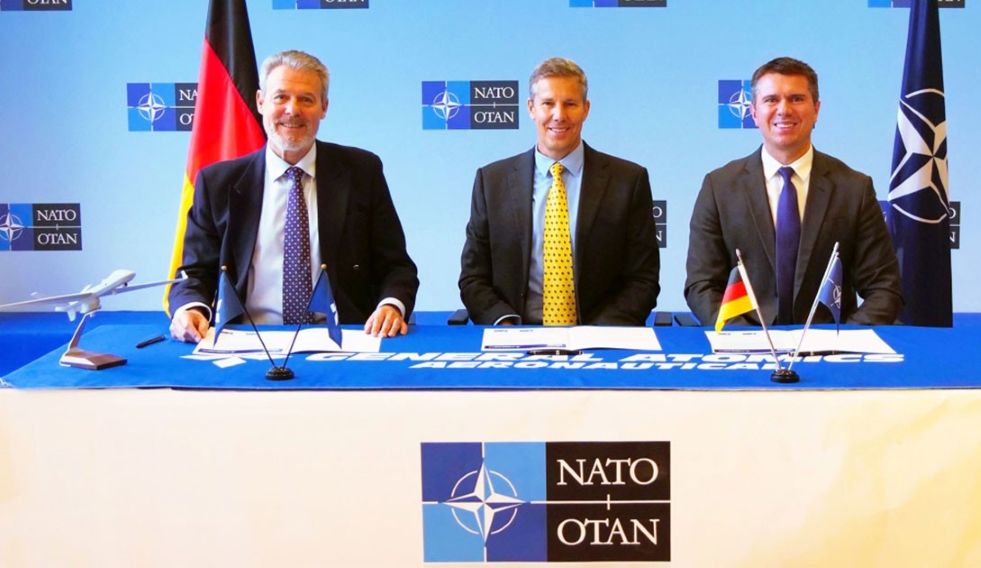
The capability milestone also coincides with Germany’s procurement decision. On January 12, 2026, GA-ASI and the NATO Support and Procurement Agency (NSPA) inked a deal for eight MQ-9B SeaGuardian remotely piloted aircraft and four certifiable ground control stations. The first deliveries are due in 2028.
The purchase of the German SeaGuardian is expected to improve maritime surveillance and anti-submarine warfare capabilities in the North Atlantic and Baltic regions. This is especially important as European navies focus more on undersea activity related to Russia and the need for constant maritime domain awareness. The practical utility of SeaGuardian in these kinds of operations will rely not only on how well it can carry sonobuoys, but also on how well its sensors, datalinks, and processing architecture work with NATO-wide ASW command-and-control and manned-unmanned teaming ideas.
Author: Özgür Ekşi