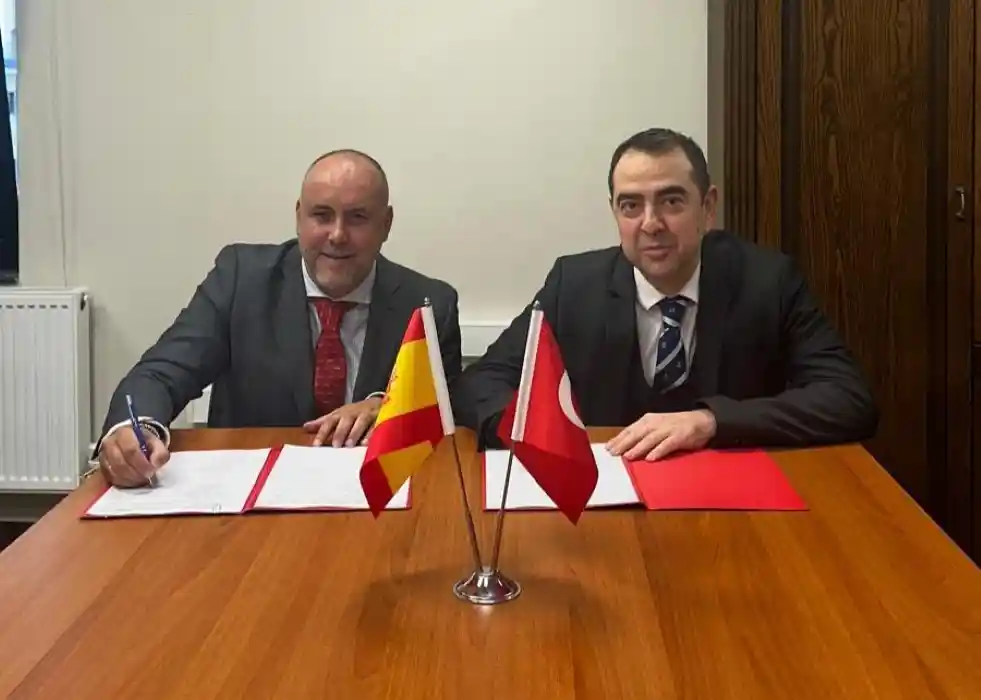
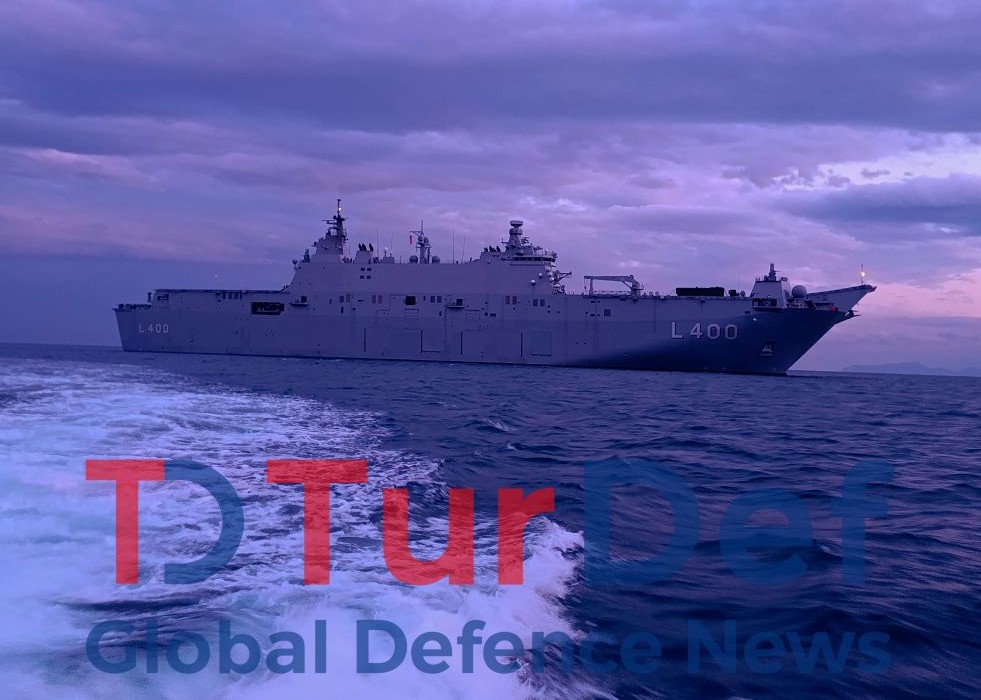
Navantia and Türkiye’s Naval Shipyards General Directorate (TGM) have formalised a framework maintenance agreement for the amphibious assault ship TCG Anadolu L400, marking a continued phase of cooperation between Türkiye and Spain built around the LHD platform.
Signed on 8 April in Ankara, the agreement establishes a flexible contractual structure enabling the Turkish Navy to procure maintenance, repair and technical services from Navantia on a periodic or as-needed basis through request-for-quotation procedures. The framework will remain in force for three years, with an option to extend for a further three years.
Under the agreement, Navantia will deliver maintenance and repair services, on-site and remote technical support, updates to technical documentation, and specialised training. The arrangement builds on an existing spare parts supply contract that has been in place since 2023.
TCG Anadolu, based on Navantia’s Juan Carlos I design, was constructed at SEDEF Shipyard in Istanbul under a 2015 contract that included engineering support and technology transfer. The vessel entered service with the Turkish Navy in 2023. The programme also covered the delivery of five diesel generator sets produced by Navantia and an integrated platform management system (IPMS) developed by Navantia Sistemas.
Beyond its contractual scope, the agreement reflects the sustained defence industrial alignment between Türkiye and Spain, with TCG Anadolu continuing to serve as a central reference point in bilateral naval cooperation.
At the same time, the framework highlights a broader structural reality in complex naval platforms. Despite being built domestically and supported by Türkiye’s shipbuilding capabilities, certain critical subsystems — particularly in platform management and system architecture — continue to rely on original equipment manufacturer (OEM) support.
However, the model does not indicate full dependency. Instead, it reflects a hybrid approach combining domestic production and operational control with selective external support for specialised systems. In this context, lifecycle support emerges as a critical phase, extending the importance of industrial cooperation well beyond initial platform acquisition.
Author: Özgür Ekşi