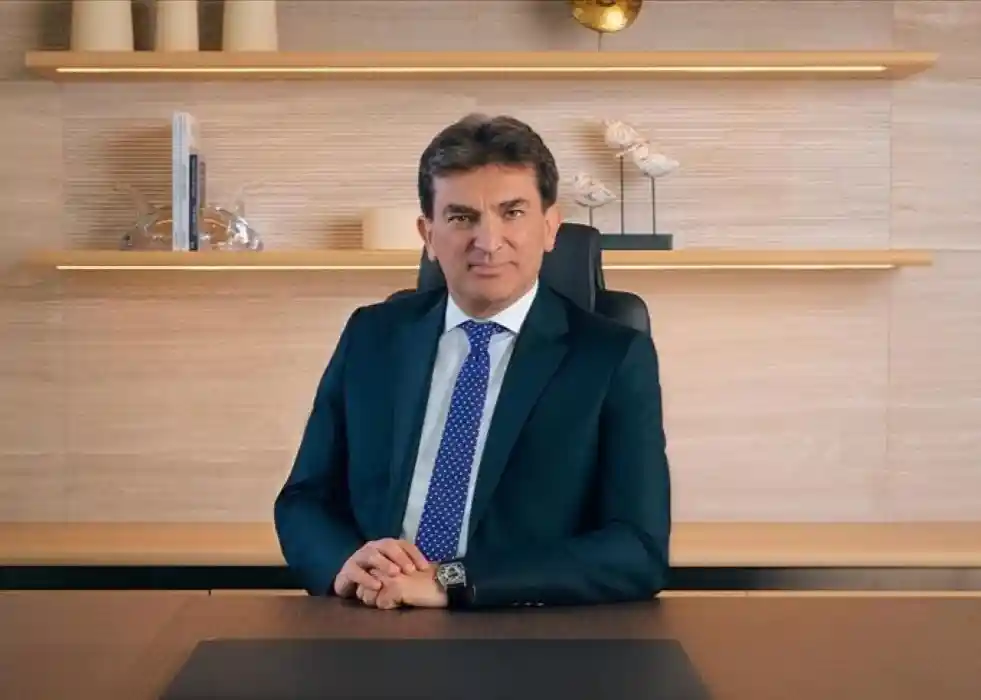
OYAK is reviewing potential acquisitions of companies developing technologies with both civilian and military applications. OYAK General Manager Murat Yalçıntaş said in an interview with Anadolu Agency during investor meetings in London that the group is examining firms developing technologies applicable to both civilian and defence sectors. The strategy reflects a growing global trend in which capital is increasingly directed toward enabling technologies that support modern defence systems.
Yalçıntaş noted that OYAK operates more than 140 companies with nearly 37,000 employees across more than 20 countries, spanning sectors from iron and steel to energy, automotive and chemicals. To manage the insurance requirements of such a diversified industrial structure, the group established OYAK Group Insurance and Reinsurance Brokerage in 2017.
The company later gained Lloyd’s Broker status in London in 2020 and now operates internationally as OYAK Global Risk Services Ltd. According to Yalçıntaş, the London office focuses primarily on structuring reinsurance programmes and managing major coverage needs such as fire, earthquake and business interruption risks for large industrial facilities. The office also works closely with international markets in specialised sectors including maritime and aviation insurance.
He said the company has recently expanded its focus to emerging risk areas such as cyber threats and supply chain disruptions.
“Risks today are no longer limited to physical damage,” Yalçıntaş said. “Digitalisation and globalised trade have created far more complex risk environments.”
He added that war and political risks have also evolved beyond their traditional insurance definitions. “Today, war coverage extends far beyond physical damage. Trade disruptions, port closures, embargoes and even cyber attacks are increasingly evaluated within the scope of war-related risks,” he said, describing such coverage as a critical element for the resilience of the global economic system.
Yalçıntaş said OYAK aims to position itself as an international strategic risk partner through its direct engagement with the London insurance market. The group plans to expand its services particularly in sectors requiring high technical expertise, including steel, heavy industry, defence and energy.
Yalçıntaş is familiar with the defence sector as he previously served as CEO of BMC during the preparation phase for the serial production of the Altay main battle tank. He identified the defence sector as one of the group’s most promising opportunity areas but emphasised that OYAK does not intend to invest directly in defence manufacturers.
Instead, the group is focusing on companies developing dual-use technologies that can serve both civilian and military markets.
“We are looking for acquisition opportunities in dual-use technology companies,” Yalçıntaş said. “We are examining firms in East Asia and Western markets that develop technologies applicable to both civilian and defence sectors.”
The approach builds on earlier investments in defence-relevant industrial capabilities. In February 2019, OYAK acquired a majority stake in Finland-based Miilux Oy, a company specialising in armour steel and wear-resistant steel used in armoured vehicles and other defence platforms.
The move also aligns with a wider shift in the global defence economy. Since 2022, venture capital funds, institutional investors and pension funds have increasingly directed capital into defence-related technologies, particularly in areas such as autonomous systems, artificial intelligence, sensors and advanced materials.
Yalçıntaş also said OYAK may gradually exit certain lower value-added sectors where competitive advantages are declining.
Assessing the potential medium- and long-term impact of conflicts in the Middle East, he said Türkiye’s geopolitical importance could increase further in the coming years, emphasising that partnerships established today may shape the post-war economic order.
Author: Özgür Ekşi