Pakistan has officially confirmed a major package of air force equipment offer from China, including J-35A fighters and HQ-19 ABMs following Chinese J-10C aircraft’s PL-15E air-to-air missile success.
The statement regarding the large-scale offer from China was released on the official X account of the Government of Pakistan.
China’s offer includes 40 J-35A fighters, KJ-500 AEW&C, and HQ-19 anti-ballistic missile (ABM) systems. Other than the military offer, Chinese technology firm Huawei will provide training to 100000 Pakistanis on AI.
China’s offer to Pakistan can be regarded as something stemming from the encouragement of the role of its equipment in the air victory against India during the recent conflict. A Chinese-made PL-15E air-to-air missile was used to shoot down an Indian Rafale fighter developed by France.
Pakistani Air Force makes extensive use of Chinese fighter jets and munitions. The fighter jets include a J-10C single-engine fighter and the co-developed CAC/PAC JF-17 Thunder as a lighter option. These fighters also use the PL-15E WVRAAM (JF-17 Block 3 and J-10C), using a dual-pulse rocket engine and AESA seeker.
J-35A
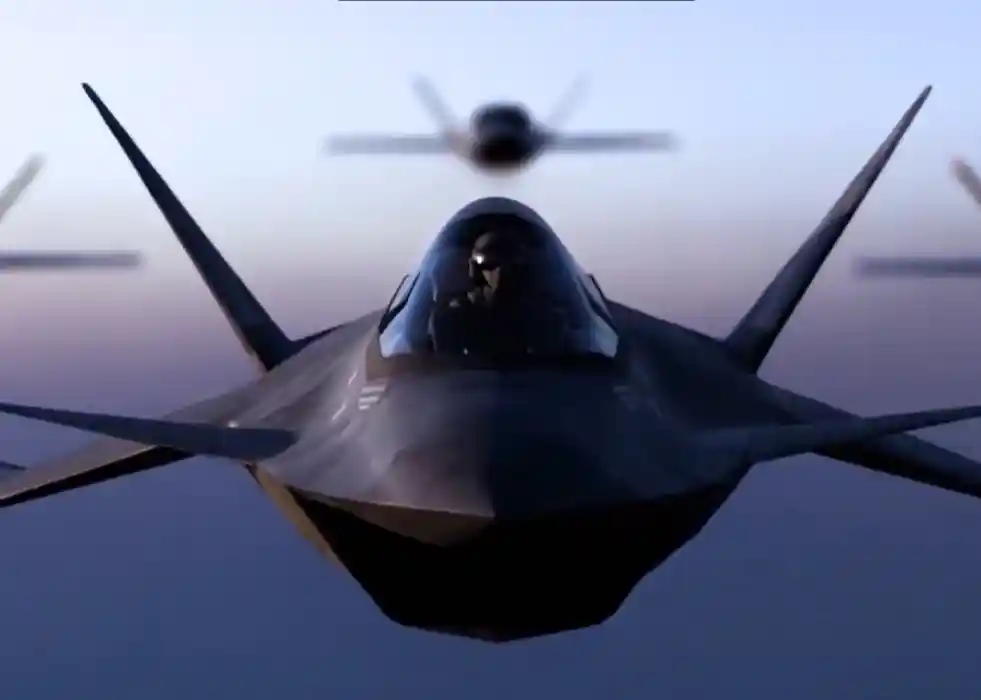
J-35A, as a low observable fighter, would be a significant jump from the current line of fighters that lack the feature. Additionally, this would mark Pakistan as the first potential export customer.
J-35A is the air force configuration of the J-35 family of multirole fighters with exportability in mind, whereas J-20 is likely to remain a China-only fighter like F-22.
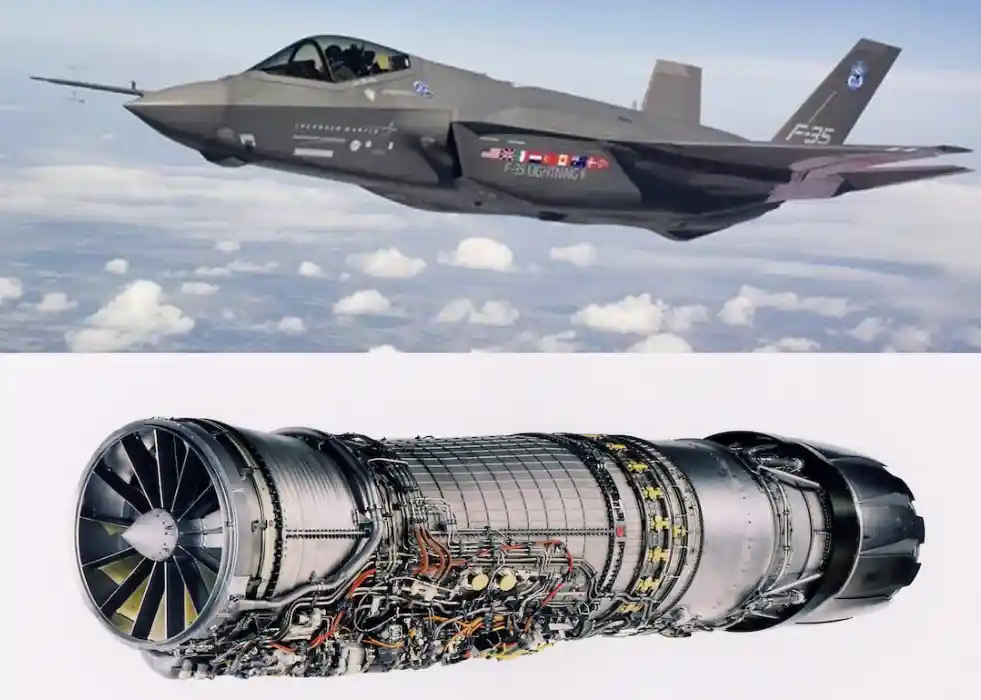
Two WS-13X turbofans power the fighter with an MTOW of 28 tonnes, each putting out a maximum thrust of 21000 lbf. WS-19 is planned as the initial batch engine, with WS-19 to take over later, which produces a thrust of 26000 lbf.
The avionics and munition options are not very different from J-10C and JF-17 except for the presence of an EOTS, which is a significant advantage for engaging surface targets coupled with low observability features.
HQ-19
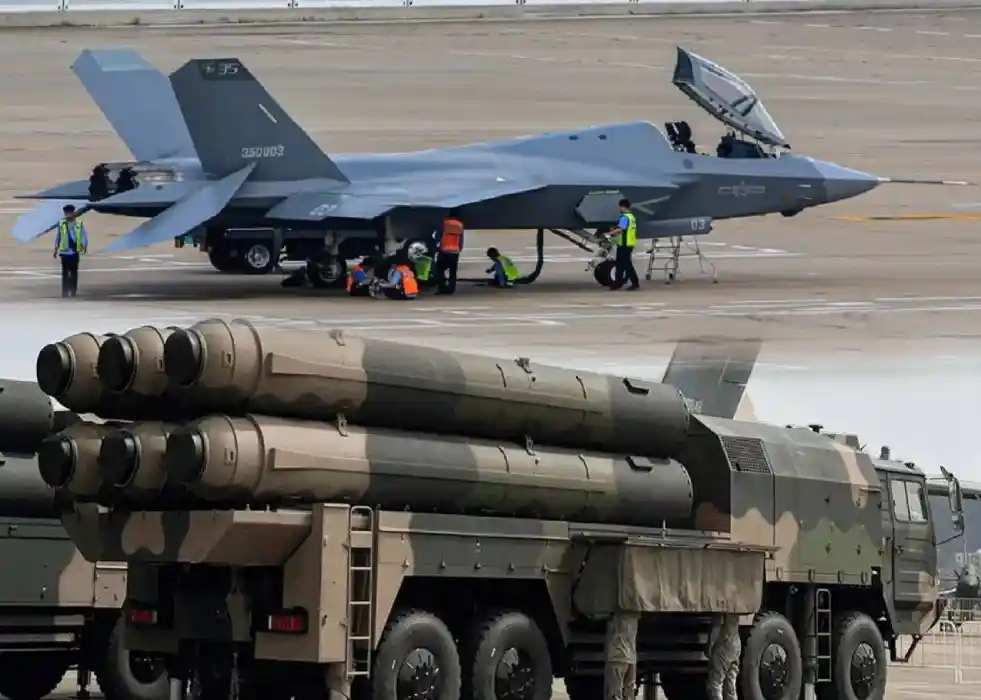
HQ-19 is the Chinese counterpart to the U.S.-made THAAD as a system focused on interceptions of ballistic missiles at exo-atmospheric altitudes.
While HQ-19’s technical details are unclear, it has an exo-atmospheric hit-to-kill vehicle instead of a warhead. The kill vehicle’s thrusters adjust the trajectory to perform a head-on collision with incoming missiles or their warheads.
The offer might have been fuelled by the possibility that India might deploy medium-range ballistic missiles in the next conflict, considering the fact that systems like HQ-19 and THAAD are mainly intended against missiles of this class.
KJ-500 AEW&C
Pakistan currently operates the Swedish Saab 2000 Erieye AEW&C, which is significantly smaller than the offered KJ-500 but is said to have played a role in Pakistan’s successes against India.
While the Saab 2000 Erieye uses a bi-planar AESA radar, the KJ-500 uses a larger radar with three panels mounted inside a disk with a 60-degree angle. This configuration notably provides better coverage, especially in front/rear aspects. In addition to the main radar, the KJ-500 has a surface-searching radar and ESM equipment.
Author: Kaan Azman
Editor: Özgür Ekşi