Madrid will phase out its AV-8B+ Harrier jets without F-35B replacement, leaving Spain without carrier-based fixed-wing aviation for at least a decade.
Spain has made a decisive move to abandon its plans for acquiring the F-35B short take-off and vertical landing (STOVL) stealth fighters, effectively ending its pursuit of carrier-based fixed-wing aviation. The decision signals the eventual dissolution of the Navy’s only fighter squadron, the 9th Squadron of the Aircraft Flotilla (FLOAN), and relegates the Juan Carlos I aircraft carrier to rotary-wing and potential drone operations. People have long thought that the American-made F-35B was the sole possible replacement for Spain's old AV-8B+ Harrier fleet, which is slated to retire around 2030. Spain never finished buying the planes, however they did send Lockheed Martin a formal Request for Information (RFI) and set aside €6.25 billion in the 2023 State Budget for future combat aircraft.
A lot of political hesitancy, notably from the socialist Sumar alliance in the administration, seems to have been a big reason. Lawmakers reportedly expressed unease over committing to a high-value contract with a U.S. defence firm. A preference for European alternatives persisted, even though none currently match the F-35B’s STOVL capability.
In July, Admiral Teodoro López Calderón, Spain’s Chief of Defence Staff, acknowledged the F-35B's unique advantages but stated bluntly that without its acquisition, Spain would have to "survive with the fourth generation" and wait for the future Franco-German FCAS system—likely not ready for many years. “That doesn’t mean we’ll be left without aviation—just that we won’t have stealth technology,” he said, pointing to the aircraft’s relevance in modern conflicts.
With the Harriers nearing obsolescence and no successor in sight, Spain’s Juan Carlos I carrier will soon lose its fixed-wing combat capability. In anticipation, the Spanish Navy and industry partners are exploring alternatives based on unmanned aerial systems.
In January, Navantia and Airbus signed a Memorandum of Understanding (MoU) to integrate the SIRTAP unmanned system into the LHD platform. SIRTAP, designed for maritime intelligence, surveillance, and reconnaissance missions, could partially fill the vacuum left by the Harriers.
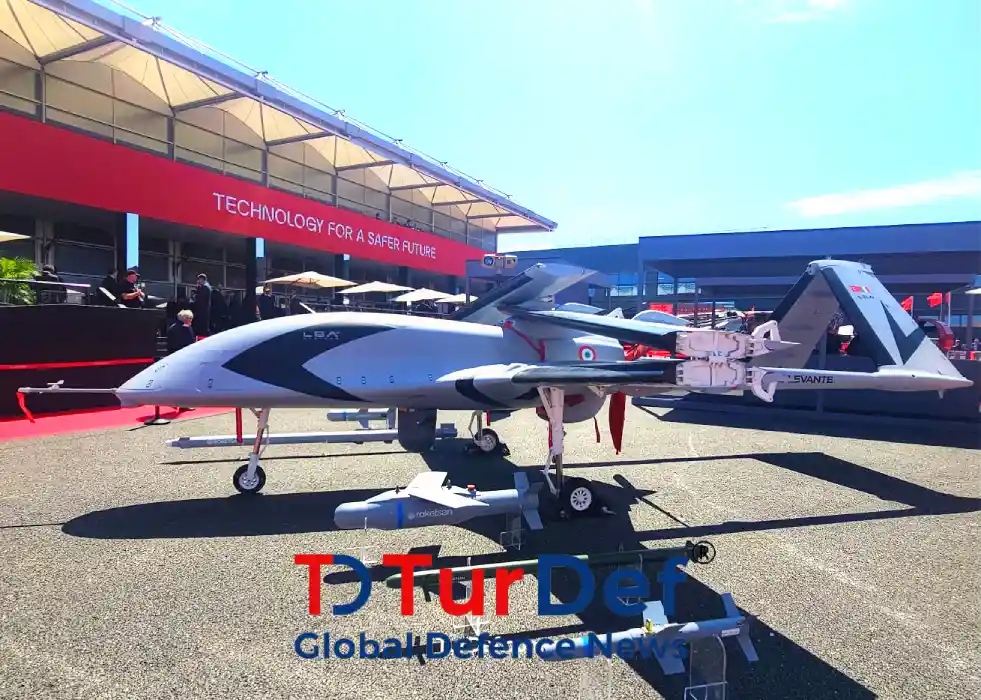
Spain is also reportedly examining other large Class III UAVs for roles such as early warning or anti-submarine warfare. This brings to mind Leonardo and Baykar’s joint venture, LBA Systems, and their TB3 UAV—designed for shipboard use and slated for deployment on Türkiye’s TCG Anadolu, sister ship of Juan Carlos I.
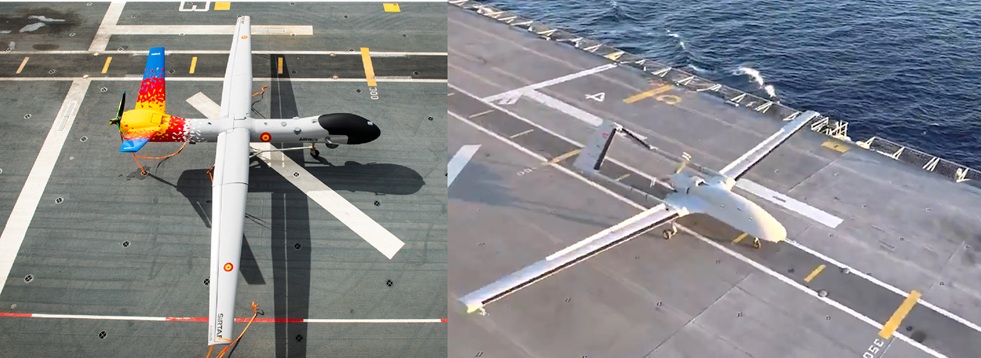
Leonardo CEO Roberto Cingolani, speaking at the Paris Air Show, confirmed that the TB3 is being tailored for carrier operations and did not rule out future anti-submarine warfare capabilities. Though early in development, such systems could represent the future of carrier aviation—not just for Türkiye, but possibly for Spain as well.