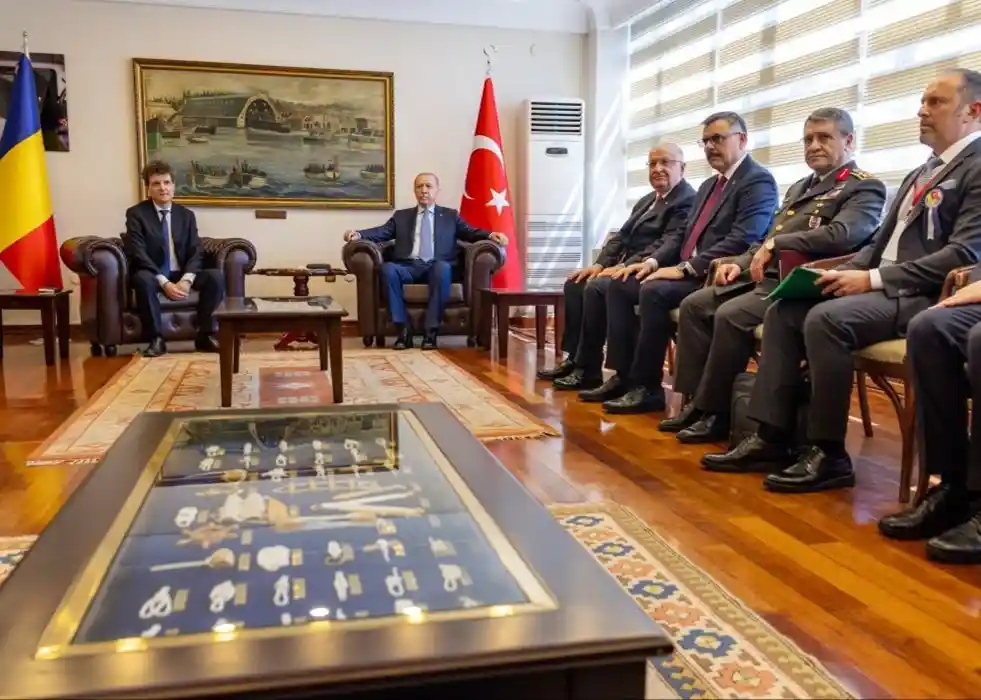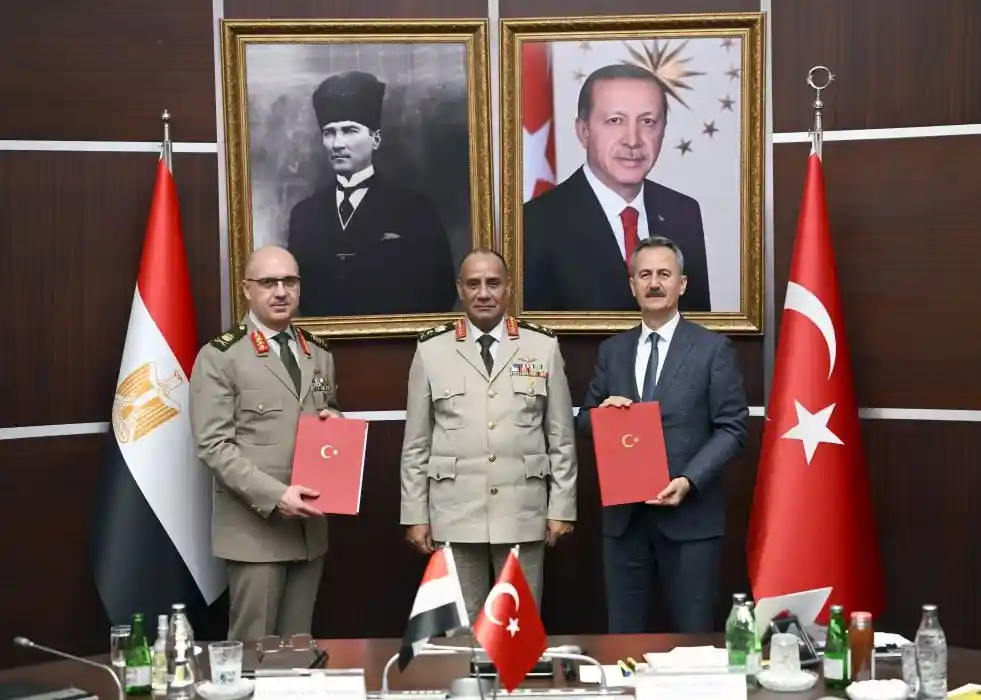
Turkiye and Egypt have opened a formal defence industry channel, with the Secretariat of Defence Industries (SSB) hosting Egypt’s Minister of Defence and Military Production, Lieutenant General Ashraf Salem Zaher, in Ankara.
Secretary of Defence Industries Haluk Görgün said the two sides discussed opportunities for cooperation in the defence industry and avenues for joint capability development. The meeting concluded with the signing of a Letter of Intent that is expected to define the framework of cooperation in the period ahead.
The announcement places SSB at the centre of a new phase in the Turkiye-Egypt rapprochement. The emphasis is not limited to procurement. Görgün’s reference to joint capability development points to a broader industrial agenda that could include production planning, technology cooperation, sustainment, subsystem supply, ammunition, platform integration and long-term programme management.
This gives the visit an institutional defence industry character. Political normalization between Ankara and Cairo has already advanced, and military-to-military contact has recently increased. The SSB track adds a third layer: defence industrial planning. If this layer deepens, the relationship may move from diplomatic repair toward practical capability cooperation.
The Letter of Intent should therefore be read as an early framework document rather than a final procurement package. It does not yet define specific programmes, quantities, delivery schedules or industrial roles. Its importance lies in creating a formal channel through which future projects can be evaluated by the two defence establishments.
The timing is also significant. The meeting followed a period of visible military engagement between the two countries. Turkiye, Azerbaijan and Egypt recently conducted the Three Eagles exercise in Konya, while Turkish and Egyptian special forces also carried out joint operational training in Egypt under the Golden Eagle framework. These activities do not by themselves constitute an alliance, but they show that operational contact is being rebuilt in parallel with political normalization.
The visit was not limited to the defence industry track. Zaher also held talks with Turkiye’s Ministry of National Defence, giving the process a wider military and strategic context. However, the SSB meeting is important because it turns the relationship toward industrial mechanisms. Defence cooperation becomes more durable when it is supported by production planning, maintenance structures, supply chains and shared capability roadmaps.
For Turkiye, Egypt is a significant potential partner. It has one of the region’s largest armed forces, a major defence market, a long-standing military production base and strategic access to the Eastern Mediterranean, the Red Sea, North Africa and the Arab world. Cooperation with Cairo could therefore offer Turkish defence companies not only a market, but also a potential industrial and geographic bridge into wider regional demand.
For Egypt, Turkish defence industry offers a different value proposition. Turkish companies have expanded rapidly in unmanned systems, armoured vehicles, naval platforms, guided munitions, air defence, electronic warfare, command-and-control software and ammunition production. Cooperation with Ankara could support Cairo’s long-standing aim of increasing local defence production and diversifying its external suppliers.
The rapprochement is notable because the two countries spent nearly a decade on opposite sides of several regional disputes. Relations deteriorated sharply after the 2013 change of government in Egypt. Libya became the most visible military and political fault line, with Turkiye supporting the UN-recognized government in Tripoli and Egypt backing the eastern camp led by Khalifa Haftar. Eastern Mediterranean energy alignments, the Muslim Brotherhood issue and the Qatar crisis further deepened the divide.
Those files have not disappeared. Libya, maritime boundaries, regional alignments and the balance of power in the Eastern Mediterranean remain sensitive subjects. However, the current direction shows that Ankara and Cairo are choosing to manage these disputes while expanding areas of practical cooperation.
That is why the defence industry track matters. It gives the normalization process a material dimension. Joint capability development, if it advances, would create bureaucratic, industrial and military links that are harder to reverse than diplomatic gestures alone. The meeting also underlines SSB’s role in Turkiye’s defence industrial diplomacy, while showing that Ankara and Cairo are moving beyond normalization toward selective defence cooperation despite unresolved strategic files.