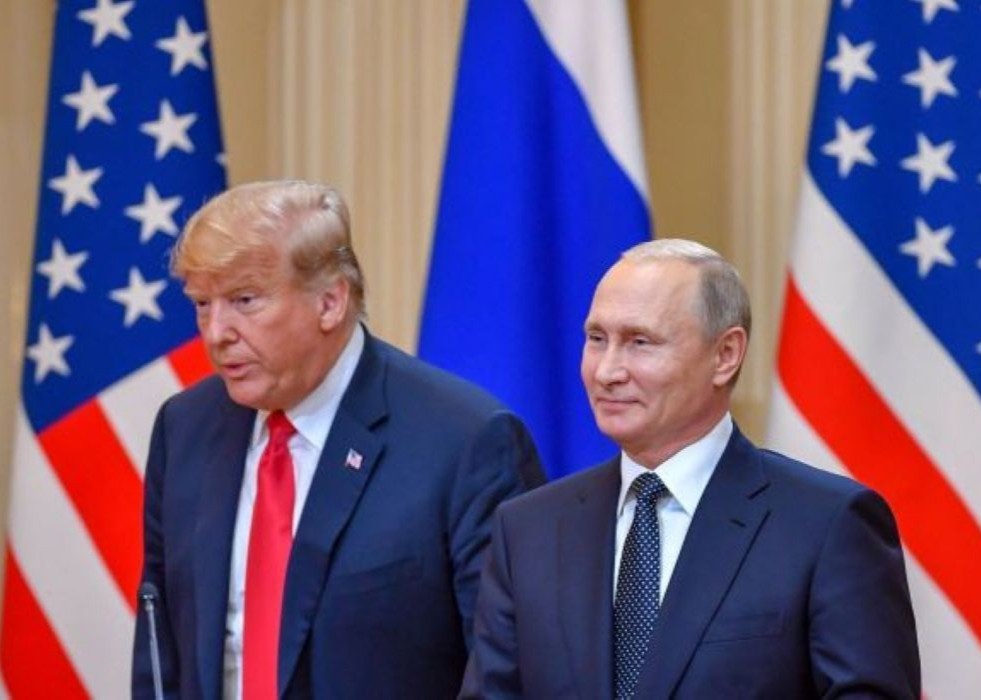
While US and Russian officials negotiate a 30-day truce for Ukraine, the media show different opinions reflecting geopolitical divisions and national interests.
Tuesday’s phone discussion between US President Donald Trump and Russian President Vladimir Putin is scheduled to cover a suggested 30-day truce in Ukraine. Trump admitted that certain problems still exist even while he expressed hope about arriving at a partial accord. Although the White House says peace is “closer than ever,” several US government views exist on the trajectory of the negotiations. Putin, meantime, has expressed support for a ceasefire but expressed reservations about its execution, especially with relation to the situation of the Zaporizhzhia Nuclear Plant and Ukrainian strikes in Russia’s Kursk area. Western leaders remain dubious; the UK, France, and Canada stress Russia must to commit specifically to peace and restate their support for Ukraine.
Differing Media Interpretations
US and European Media
Often reflecting European viewpoints, Politico said, “President Trump failed to convince President Putin to stop attacks in Ukraine.” The magazine claims that Putin agreed to momentarily stop strikes on Ukraine’s energy infrastructure while rejecting a complete 30-day truce. While the Trump government gave reaching a truce the first priority, the Kremlin kept its demands: stopping Western military aid to Ukraine, reversing NATO expansion plans, and acknowledging seized areas as part of Russia. Moscow’s intentions were called into doubt when Russia executed drone strikes on Kyiv and other Ukrainian cities following the conference despite continuous discussions.
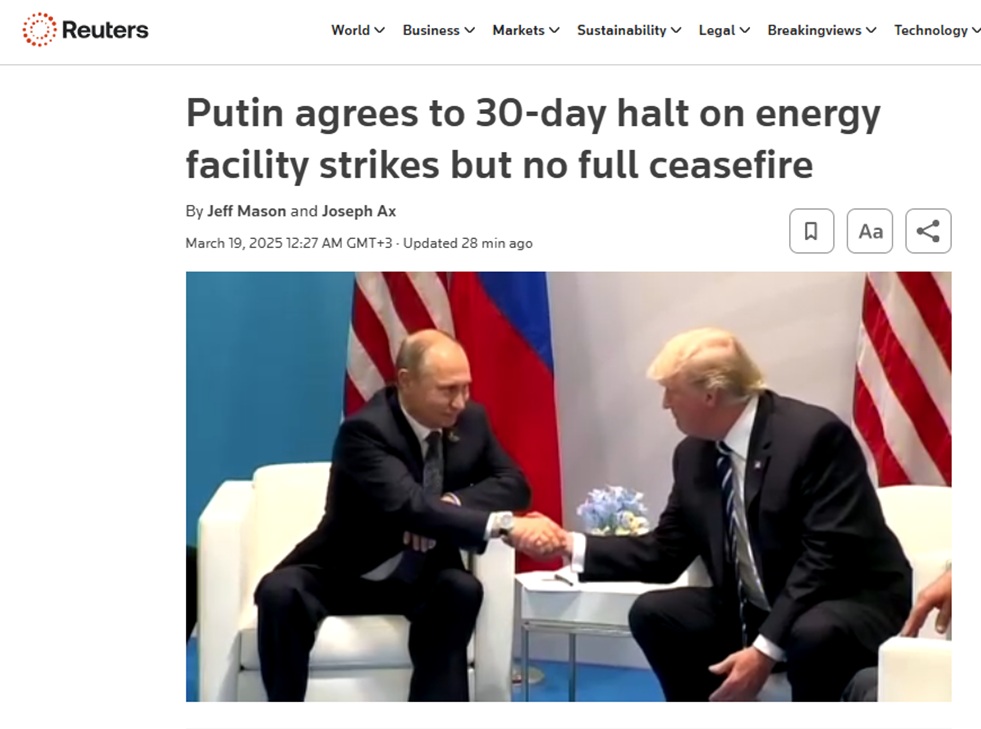
On the other hand, Reuters underlined Putin’s approval of Trump’s suggestion to halt strikes on the electricity system of Ukraine for thirty days. Ukraine has signalled that it is open to evaluating this limited ceasefire, yet Moscow refused to halt all military operations. Putin cited concerns that a full ceasefire could allow Ukraine to rearm and insisted that all foreign military and intelligence support to Kyiv must end. The White House responded by announcing the imminent launch of broader peace negotiations, though it remains uncertain whether Ukraine will be directly involved.
British Media
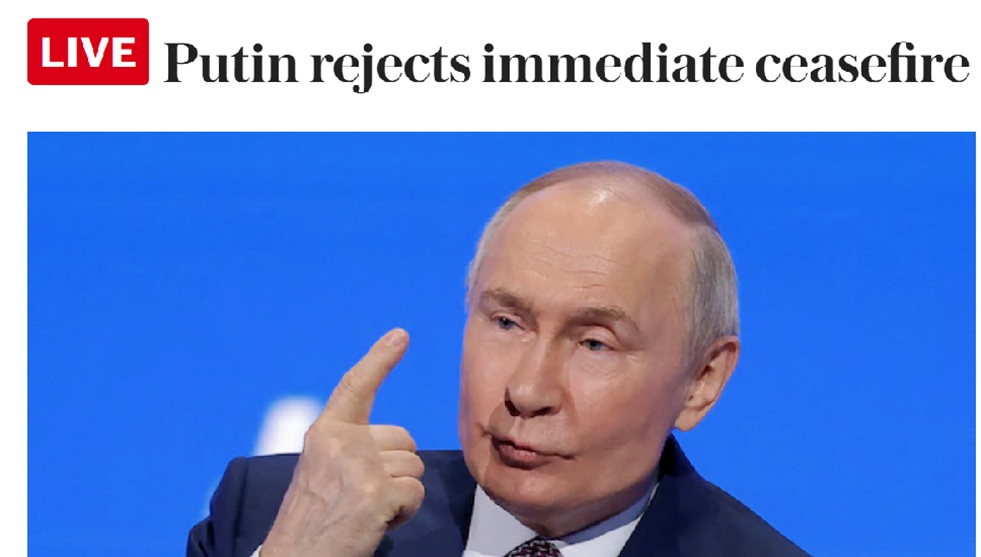
The UK press, including outlets such as The Telegraph, framed the talks as a mixed outcome. Headlines noted that “Putin rejects immediate ceasefire but agrees to pause attacks on critical infrastructure.” Kremlin sources confirmed that both leaders agreed to Middle East-based negotiations to explore a 30-day truce, yet Moscow made it clear that Western support for Ukraine must be discontinued as a precondition for lasting peace. White House sources indicated that the first phase of discussions would focus on a potential maritime ceasefire in the Black Sea, with further stages to follow. Ukraine, meanwhile, accepted a US proposal to suspend long-range missile strikes temporarily.
Middle Eastern Media
Al Jazeera offered a more positive interpretation, focusing on the limited progress achieved. The Qatari outlet reported that “Trump and Putin agree to halt strikes on Ukraine’s critical energy infrastructure for 30 days.” While acknowledging that the agreement fell short of the original proposal for an unconditional ceasefire, the article noted that the energy-related pause was a step forward. However, the report also highlighted ongoing Russian drone attacks, which left thousands without electricity in central Ukraine, as a lingering concern.
US Domestic Media
CNN concentrated on the specifics of the ceasefire conditions, emphasising that “Putin agrees to suspend infrastructure attacks but rejects full ceasefire.” The article claims that 90 minutes of chat between Trump and Putin followed, which the Kremlin indicated its readiness to ongoing negotiations, especially in relation to prisoner swaps and de-escalation in the Black Sea area. The White House, in the meantime, underlined that more general peace discussions would start right away. While Putin focused on obtaining security guarantees to Russia’s advantage, Trump said he and Ukrainian President Volodymyr Zelenskyy were willing to quickly end the war.
Official White House Statement
Reiterating that both presidents agreed on the need to end the war via “sincere and good faith negotiations,” the White House issued an official statement summarising the main elements of the Trump-Politan call. Although the comment kept a positive note, it underlined that conversations would start with an energy and infrastructure truce, then marine security talks in the Black Sea, and finally, a more general peace deal would follow. The remarks also highlighted how Trump and Putin talked about strategic arms limitation and regional security; both presidents agreed that Iran shouldn’t get nuclear weapons.
Conclusion: A Divided Global Reaction
The Trump-Putin negotiations underlined how media narratives are shaped by geopolitical views. Middle Eastern media saw the presentations as progress, while US and European sources regarded them as inconclusive or inadequate. British media were wary, noting development but underlining the difficulties still to come. Notwithstanding residual questions about Russia’s objectives and Ukraine’s place in the next discussions, the White House kept a positive posture. The following actions will rely on whether these first agreements lead to real development towards the resolution of the dispute.