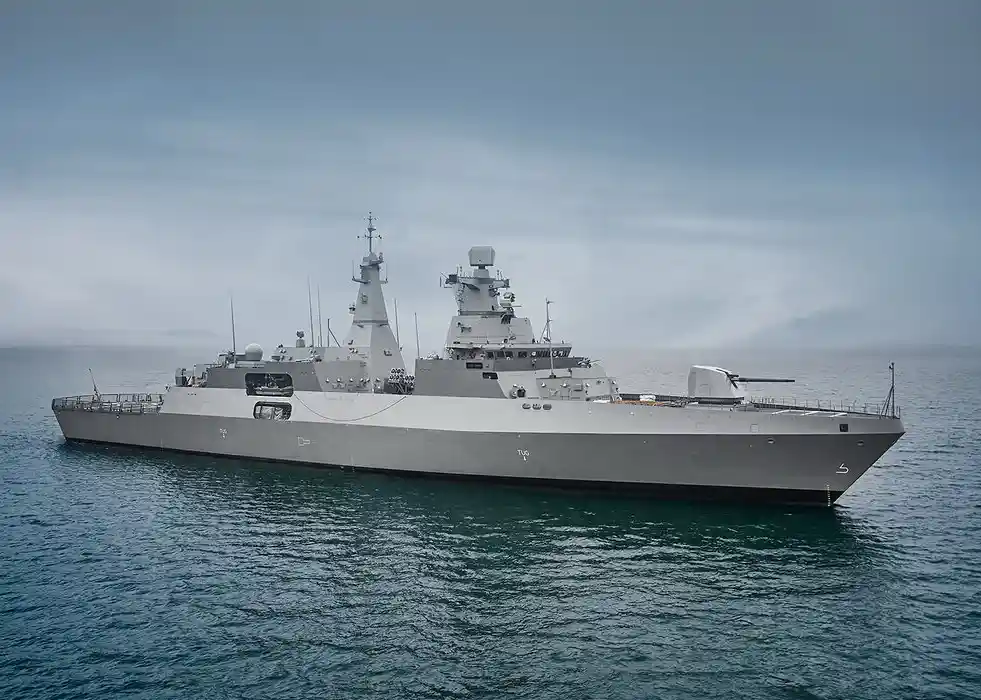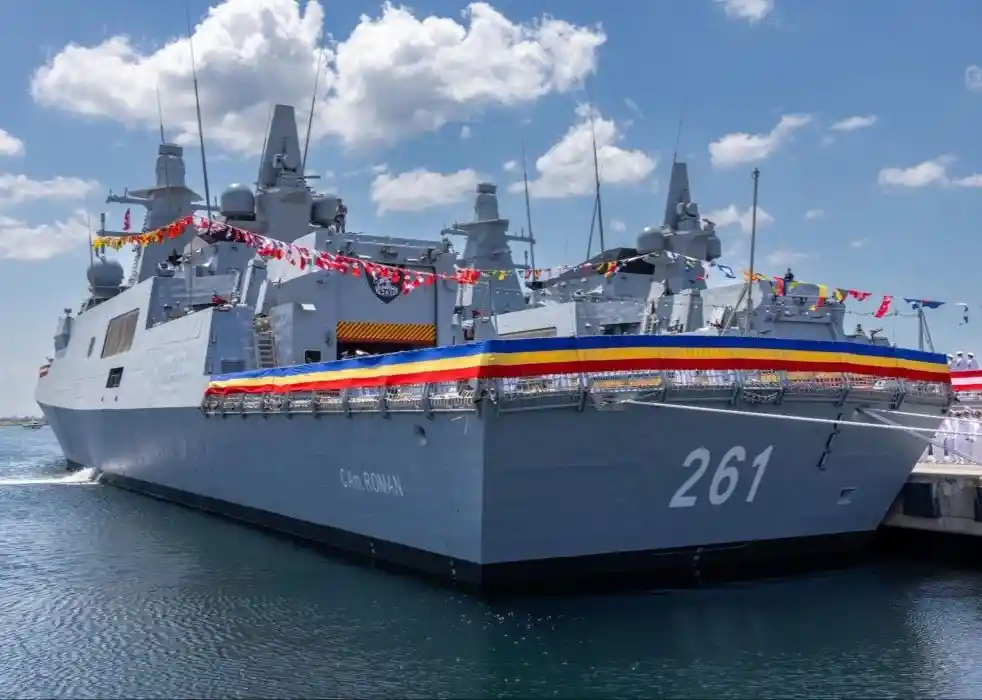
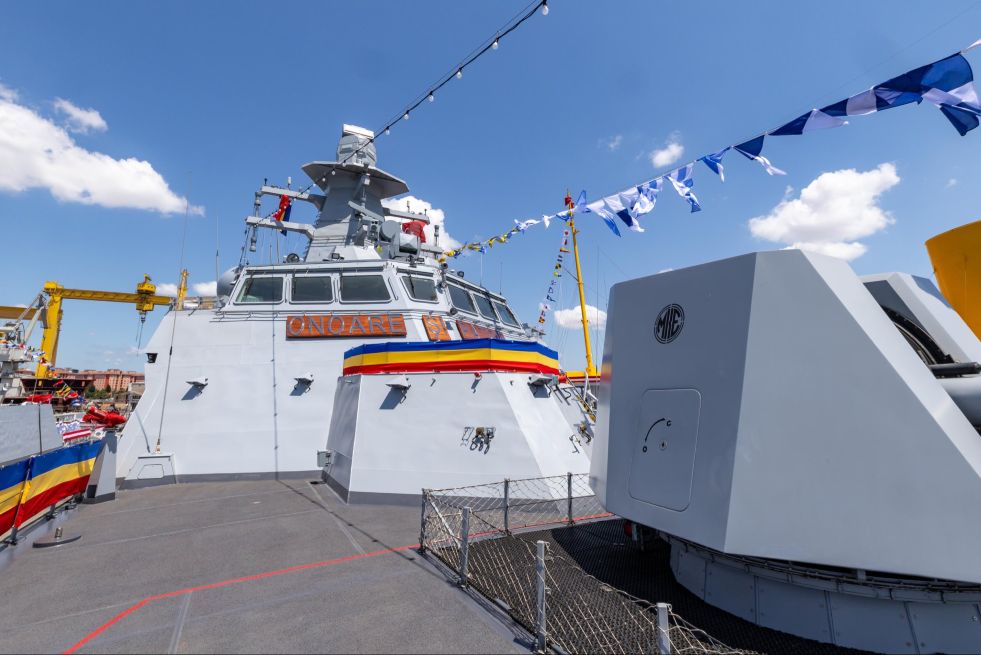
Turkiye has delivered the Hisar-class vessel CAm. Roman to the Romanian Naval Forces, marking the country’s first export of a combat-capable naval platform to a European Union and NATO member state.
The handover ceremony was held at Istanbul Shipyard Command (ITK) with the participation of President Recep Tayyip Erdoğan and Romanian President Nicuşor Dan. The platform entered Romanian service under the name “Rear-Admiral August Roman” with pennant number 261.
Dan described the vessel as a Hisar-class corvette entering service with the Romanian Naval Forces under the national flag. He said the acquisition supports Romania’s defence investment pledge made at The Hague, NATO’s capability targets and common security in the Black Sea region. He also framed the delivery as part of a wider Euro-Atlantic defence industrial effort, praising Turkish companies for their professionalism in implementing joint contracts and welcoming initiatives aimed at developing maintenance facilities in Romania for vessels serving the national defence system.
The delivery comes after years of failed Romanian efforts to recapitalise the navy. Naval Group won Bucharest’s 2019 programme for four Gowind corvettes and the modernisation of two Type 22 frigates, but the effort collapsed in 2023 after prolonged disputes over costs, industrial arrangements and implementation. Four of the years lost in Romania’s corvette programme coincided with Russia’s full-scale war against Ukraine, during which the Black Sea became an active theatre of missile strikes, mine threats, maritime disruption and contested sea control, leaving Bucharest to seek a naval solution in a far harsher security environment than the one in which its original corvette programme was conceived.
Erdoğan used the ceremony to frame the delivery as part of Turkiye’s broader defence-industrial rise and its push for strategic autonomy. Arguing that countries unable to secure their place “at the table” risk finding themselves “on the menu,” he presented defence industry as a pillar of national strength in an increasingly coercive security environment.
That message also carries weight in the Black Sea. Since Russia’s full-scale invasion of Ukraine, several NATO members — especially the United States and the United Kingdom — have sought a stronger Allied naval presence in the basin, while Turkiye has remained committed to preserving the Montreux Convention framework that limits the access of non-littoral warships through the Turkish Straits. In that setting, delivering a combat-capable vessel to Romania points to a different way of reinforcing NATO’s Black Sea posture: strengthening a littoral Ally’s navy without reopening the legal and political balance governing access to the region.
Turkiye’s earlier naval export to an EU and NATO member had been STM’s auxiliary oiler programme for Portugal. The Romanian delivery, however, takes Turkish naval exports into the combat-vessel segment within the Alliance.
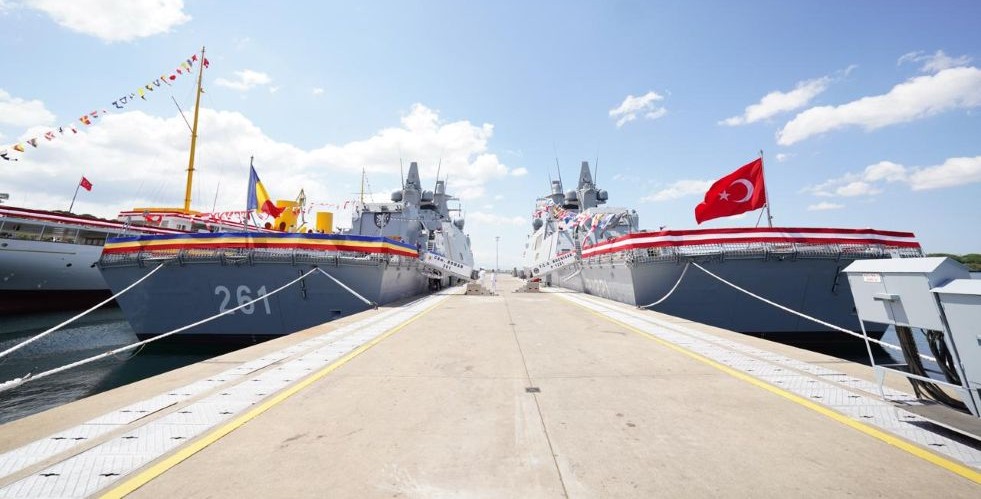
The ceremony also marked the commissioning of TCG Koçhisar (P-1221), the second Hisar-class offshore patrol vessel built for the Turkish Navy, underlining how Turkiye is now fielding the class at home while exporting it to a NATO ally.
Turkiye is currently sustaining one of the region’s busiest naval construction pipelines, with around 40 military vessels under construction in Turkish shipyards. These range from offshore patrol vessels and frigates to larger programmes such as the MUGEM aircraft carrier and the TF-2000 air-defence destroyer. Images shared from the Romanian vessel also appeared to show MKE’s 76 mm DENİZHAN naval gun, suggesting that the export includes Turkish weapons and subsystems alongside the platform itself and reflecting how Ankara is increasingly using its naval industrial base both to recapitalise its own fleet and to deepen defence ties with NATO allies in the Black Sea and beyond.
Author: Özgür Ekşi