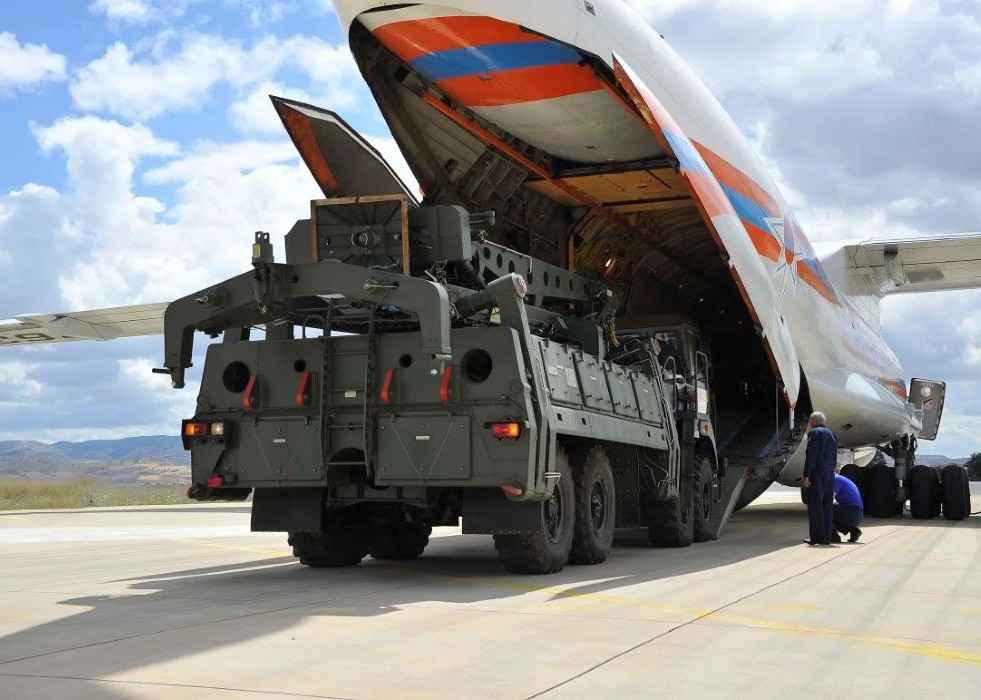
Representatives Gus Bilirakis and Brad Schneider addressed a formal letter to the US State Department, expressing concerns over what they view as a potential strategic escalation with geopolitical consequences.
Concerns over Israeli security and US deterrence
In their letter, the lawmakers caution that relocating the S-400 to Syria—regardless of the operator—would fundamentally reshape the region’s air defence dynamics. If deployed along Syria’s western corridor, the system’s advanced radar and anti-stealth capabilities could impair Israeli operations targeting Iranian assets or Hezbollah arms routes. This, they argue, would degrade Israel’s operational flexibility and challenge the long-standing US policy of preserving Israel’s Qualitative Military Edge (QME).
The letter further notes the ambiguity over system operation: should Turkish personnel maintain control, a direct military confrontation with Israeli forces becomes a tangible risk. If Syrian or proxy operators assume command, Washington's visibility and influence would diminish even further, introducing what they call “a new layer of strategic instability” in an already volatile environment.
CAATSA sanctions under scrutiny
The lawmakers firmly reject any suggestion that transferring the S-400 out of Türkiye would address Ankara’s liability under CAATSA (Countering America’s Adversaries Through Sanctions Act). They emphasise that the violation stems not from the location of the system, but from Türkiye’s original procurement—a “significant transaction” with the Russian defence sector.
“Moving the system does not erase the violation,” the letter states. “It merely relocates it.” Accepting such a transfer as a workaround would, they argue, erode the legal integrity of CAATSA and signal to adversaries that defiance of US law can be negotiated away retroactively.
Broader critique of Turkish policy
Representatives Bilirakis and Schneider contextualise their concerns within a broader critique of President Erdoğan’s regional conduct. They highlight Turkish F-16 sorties over Greek and Greek Cypriot airspace, Ankara’s overt support for Hamas, and its suspension of diplomatic and trade relations with Israel.
Strategic impact assessment urged
The letter was addressed to the Bureau of Political-Military Affairs—not typically the lead body on sanctions enforcement—because of its central role in evaluating shifts in the regional military balance. As the coordinating entity for the US-Israel Joint Political-Military Group, the Bureau is seen as uniquely equipped to assess and communicate the broader strategic impact of the proposed S-400 redeployment.
The lawmakers call for a comprehensive analysis of how such a move would affect the US force posture, Israel’s QME, and regional deterrence frameworks. They also request a classified briefing to Congress and key policy stakeholders.
According to the letter, the potential transfer is not just about a missile system—it represents a test of US credibility, legal consistency, and the deterrent power of its foreign policy architecture.
Author: Özgür Ekşi