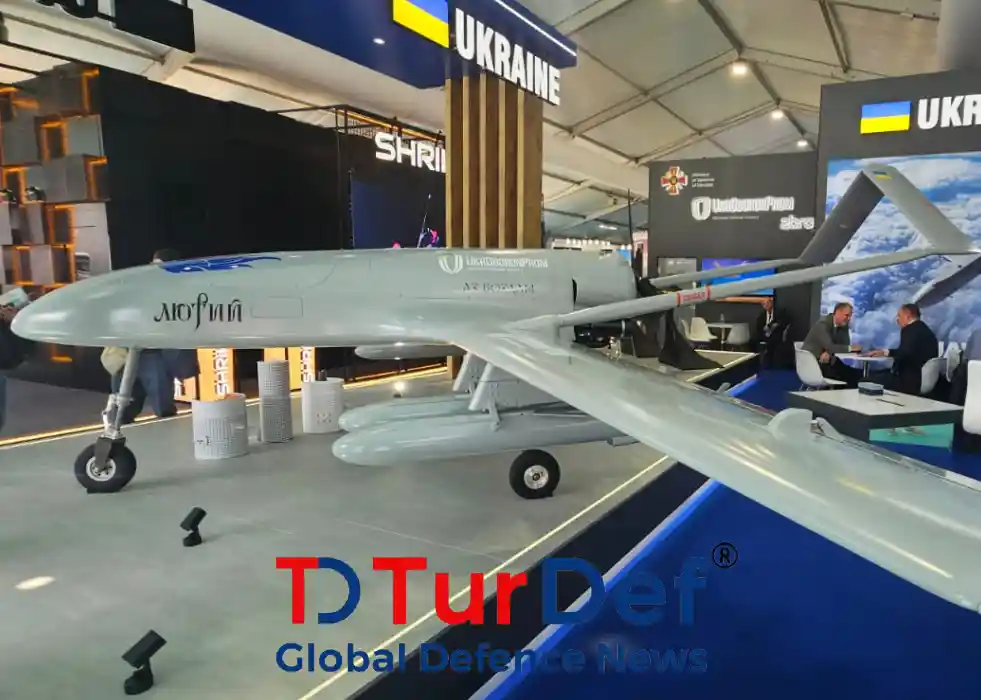
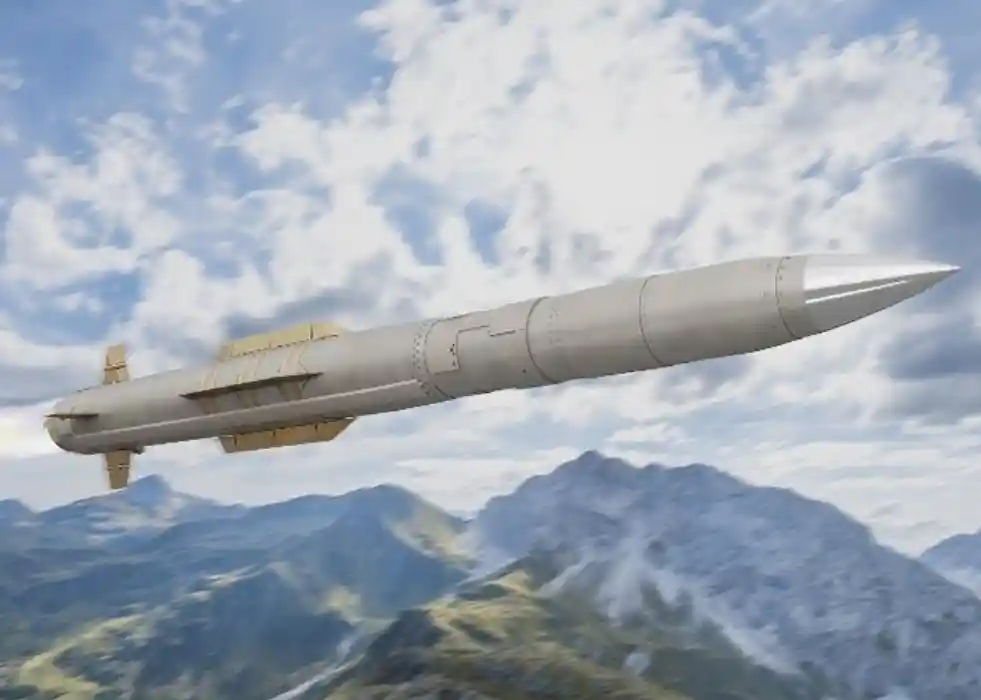
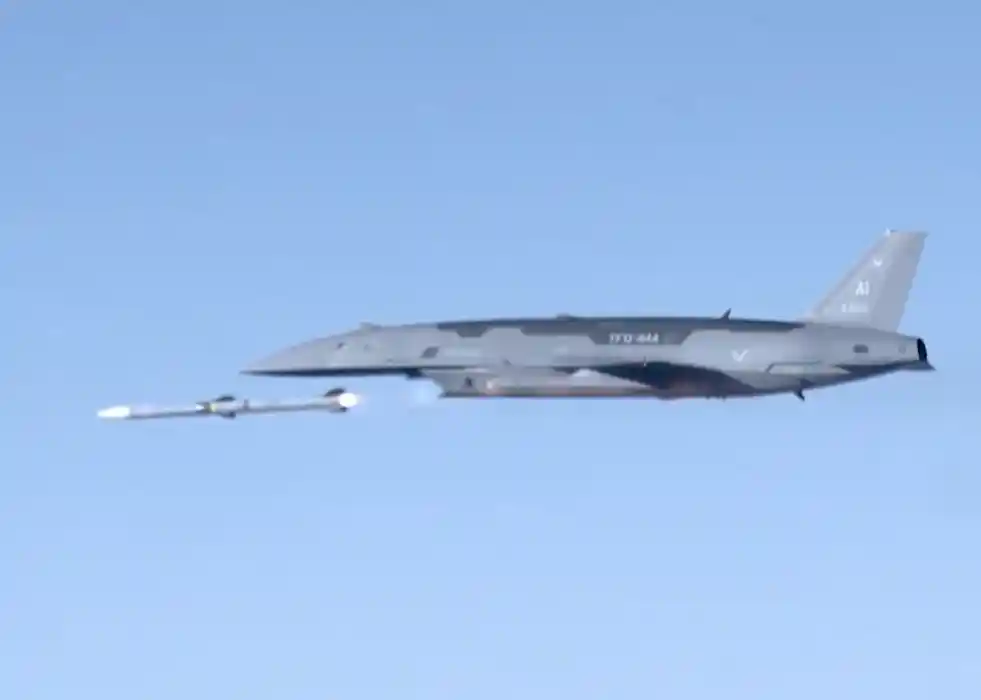
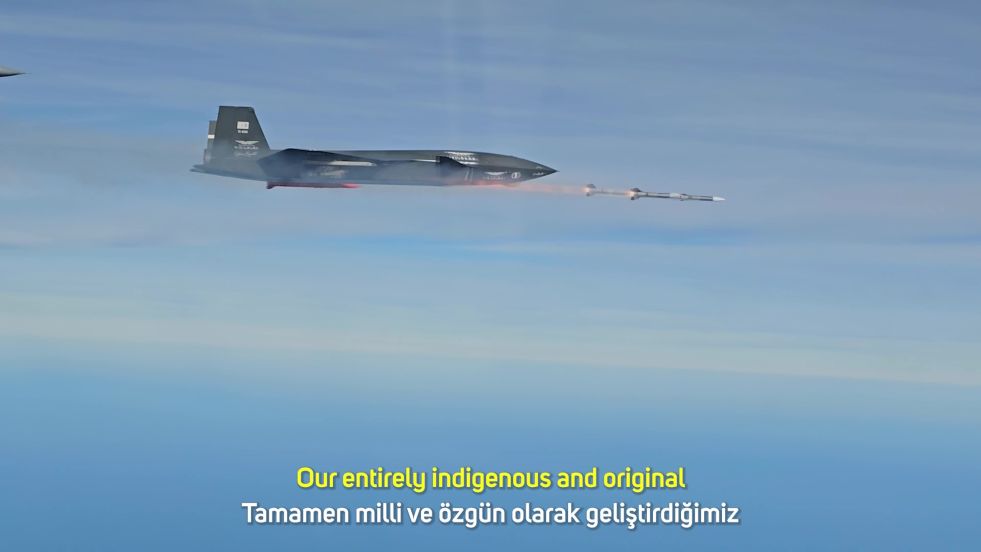
Bayraktar KIZILELMA hit a jet-powered target with a GÖKDOĞAN BVR missile in a landmark test off Sinop, becoming the world’s first unmanned fighter jet to achieve an air-to-air kill and demonstrating a decisive leap in loyal-wingman combat capability.
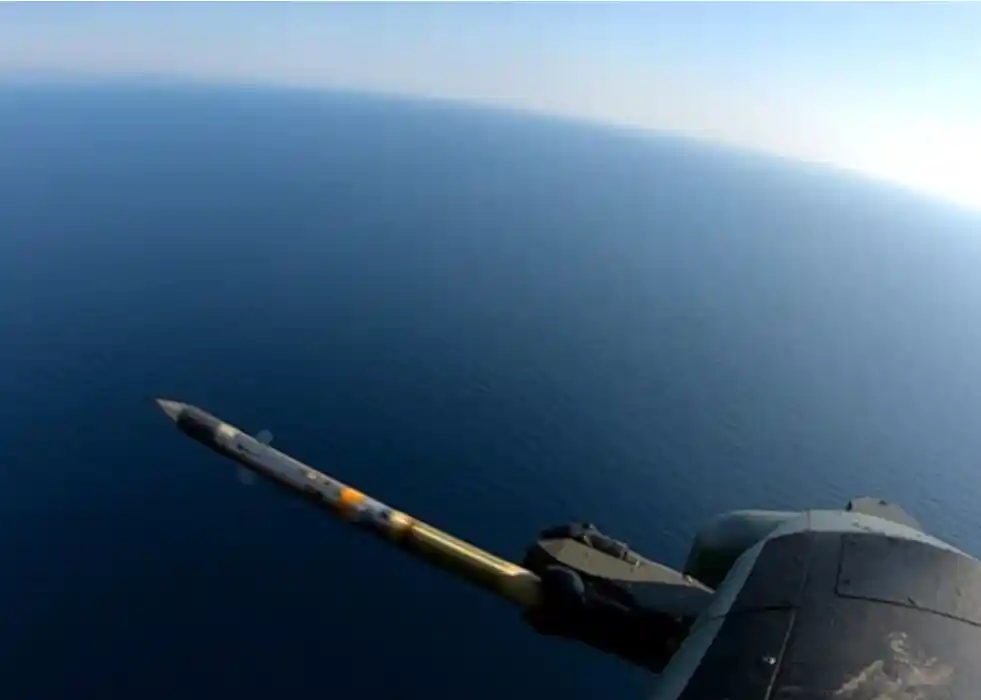
Bayraktar KIZILELMA, indigenously and originally developed by Baykar, struck a high-speed jet-engine aerial target marked by ASELSAN’s MURAD AESA radar during a firing test in the Sinop Firing Area. The unmanned fighter launched TÜBİTAK SAGE’s GÖKDOĞAN air-to-air missile from its wing station, hitting the target with complete accuracy.
This test represents a global first: while platforms such as MQ-9 Reaper, XQ-58 Valkyrie, Skyborg demonstrators and China’s Wing Loong-3 or FH-97 have explored air-to-air concepts, none has ever executed a verified BVR engagement against a jet-powered aerial target. Previous unmanned air-to-air firings were limited to short-range WVR tests. Bayraktar KIZILELMA stands as the world's first and only unmanned fighter jet to execute a genuine Beyond Visual Range (BVR) air-to-air strike which will transform future air combat strategies.
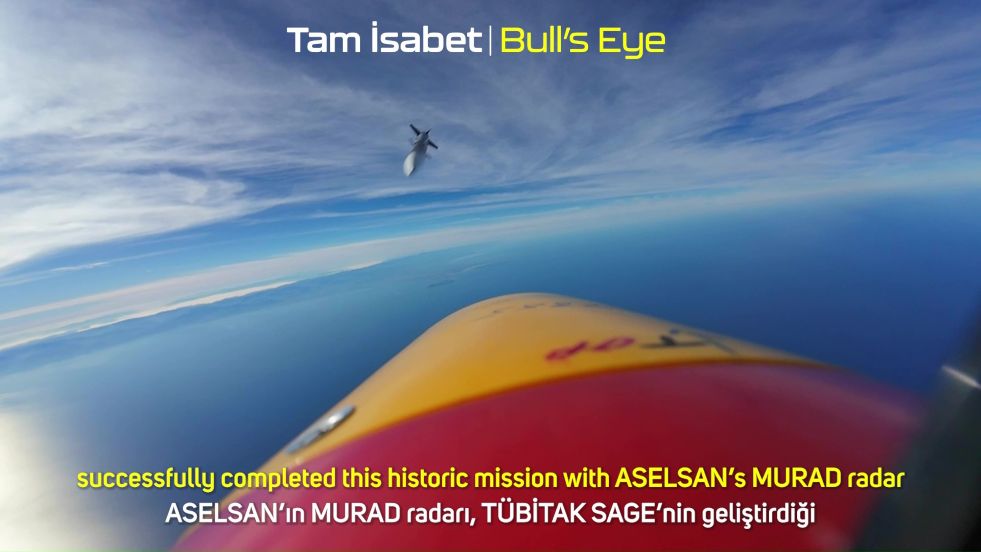
The formation of five F-16s from Merzifon with Bayraktar KIZILELMA above Sinop Fire Range demonstrated the development of manned-unmanned teaming concepts through their coordinated flight pattern. The Bayraktar AKINCI UCAV recorded the event by flying near the formation. The formation structure demonstrates the developing "loyal wingman" concept which enables unmanned fighters to work with manned planes for expanded detection capabilities and protected pilot safety and precise weapon delivery. The global race toward loyal-wingman capabilities—pursued by the United States, Australia and China—remains at the conceptual or prototype stage. With KIZILELMA’s BVR engagement, Türkiye has fielded the first unmanned fighter jet to demonstrate a core pillar of this doctrine: autonomous long-range interception of airborne threats. This places Türkiye among the few nations able to practically demonstrate manned–unmanned air combat integration.
As part of the test scenario, a jet-powered target aircraft was launched and detected by ASELSAN’s MURAD AESA radar integrated into KIZILELMA. Once the radar precisely marked the target, the unmanned fighter launched the GÖKDOĞAN missile, completing Türkiye’s first fully indigenous air-to-air kill chain—indigenous UAV, indigenous radar, indigenous missile.
The firing was monitored in flight by Air Force Commander Gen. Ziya Cemal Kadıoğlu, Combat Air Forces Commander Gen. Rafet Dalkıran, ASELSAN General Manager Ahmet Akyol and Baykar Chairman Selçuk Bayraktar, who observed the engagement from F-16 cockpits. TÜBİTAK SAGE Institute Director Kemal Topalömer and ROKETSAN General Manager Murat İkinci also witnessed the event.
Why No UAV Had Achieved a BVR Air-to-Air Engagement Until Now
Long-range air-to-air engagements place demands on an unmanned aircraft that exceed the design envelope of every previous UAV. A BVR interception requires the platform to generate sufficient speed and altitude to place the missile inside its optimal launch envelope; most UAVs—such as MALE-class platforms—fly too slowly and cannot supply the kinematic energy needed for weapons like AIM-120-class missiles to reach their design range.
At the same time, the aircraft must carry a high-power radar or an equivalent long-range sensor suite capable not only of detecting but also of tracking and classifying a fast, manoeuvring aerial target at tens of miles. Prior UAVs either lacked the power, cooling, or aperture size for such radars, or carried only surface-attack–oriented sensors.
A true BVR shot also demands continuous mid-course guidance updates via a resilient, jam-resistant datalink. The requirement to maintain long-range C2 links proves to be one of the most challenging aspects for unmanned systems because it faces three major problems which include delayed communication and limited data transfer rates and exposure to electronic interference. The loss of datalink signal during missile flight will cause guidance system performance to deteriorate.
Additionally, the fire-control architecture must autonomously compute launch geometry, target aspect, closure rate, and no-escape zones—functions traditionally handled by a fighter pilot in tandem with an advanced mission computer. Most UAVs lacked both the processing power and the software maturity to execute these calculations without human pilot cognition.
Author: Özgür Ekşi