By Özgür Ekşi
The Turkish Aircraft Carrier MUGEM is currently being designed in the Project Design Office. The ship will expand the force's mission definitions and add new capabilities.
With the escort destroyers TCG Berk (D358) and TCG Peyk (D359), Turkiye attempted to build modern warships with its own resources and capabilities for the first time in the Republic era. After the platforms, the issue of meeting the requirements of the Navy with domestic means remained on the dusty shelves. This long silence was broken after the millennium with the MilGem Project, never to return.
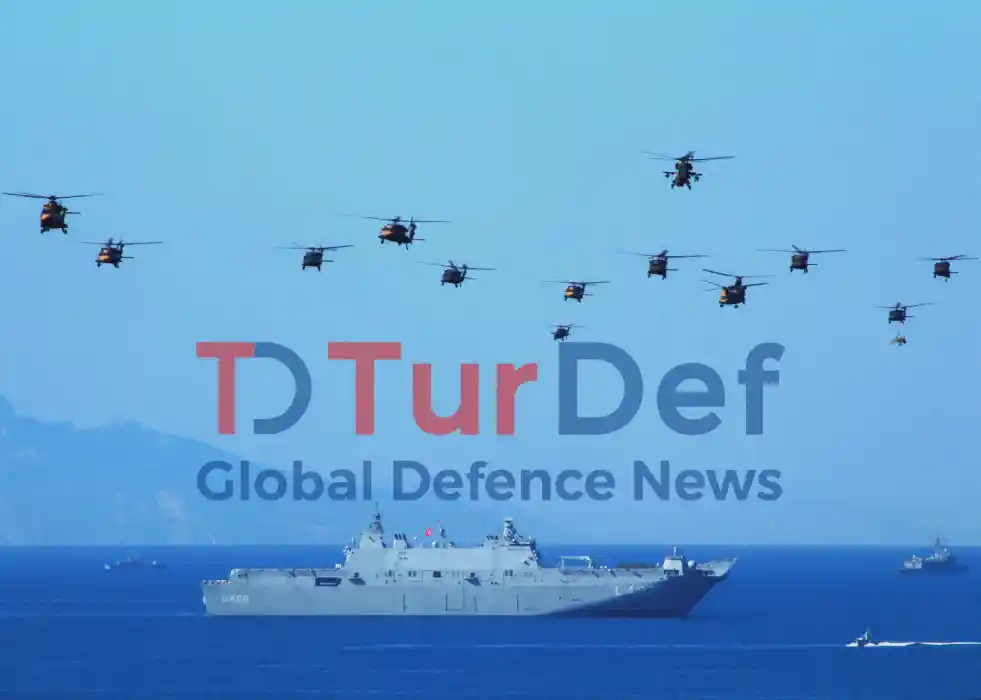
The studies that started with the Ada Class corvettes continue today with the Istif Class frigates. The next platform is the TF-2000 Anti-Air Warfare Destroyers. The Turkish Naval Forces, which gained the capability to carry out a full amphibious operation with aviation elements with TCG Anadolu (L 400), has rolled up its sleeves for an aircraft carrier with the motto 'The future is in the skies'.
The Design Project Office (DPO), which is the root of the Indigenous MilGem Programme, has started structural and conceptual design studies for the Indigenous aircraft carrier MUGEM, which stands for National Aircraft Carrier or in Turkish Milli Uçak Gemisi. This step, which recently came to the agenda, will provide an important air power multiplier for the Turkish Navy's overseas mission capability.
It was stated that an aircraft carrier is needed to increase the Turkish Navy's deterrence and effectiveness in overseas areas of interest with additional power capability. For this purpose, DPO continues its activities for Turkiye's first Indigenous Aircraft Carrier. The office, which consists entirely of Turkish Navy personnel, has considerable experience, technical infrastructure, and know-how from past projects.
With the MUGEM studies coming to the agenda for the first time, it was a matter of curiosity whether such a ship could be built with domestic facilities. Turkiye has a deep-rooted tradition in shipbuilding. MilGem has extended these values to military platform design, development and construction. The necessary steps had recently been taken for the infrastructure required for the hull construction of the platform. Reminding the military vehicles built in the past and current in different classes and displacements would also be useful. Of course, a ship is not just an empty metal can. With the investments made, the Turkish Defence Industry has made significant progress in vertical and horizontal expansion. In general, the equipment that the ship will need, except for the major components of the propulsion infrastructure, will be provided by domestic capabilities.
The most important question for TURDEF is the construction method. The construction of all the blocks under the responsibility of ASFAT under a single roof may make it difficult to meet the desired schedule in terms of time. The UK method for HMS Queen Elizabeth (R08) and HMS Prince of Wales (R09) are actually good examples for Turkiye. Assembling the blocks produced in different shipyards in the aforementioned ships in the final dock is a practical and, therefore, faster solution, which may also pave the way for reducing costs.
Technical Specifications and Maritime Capabilities
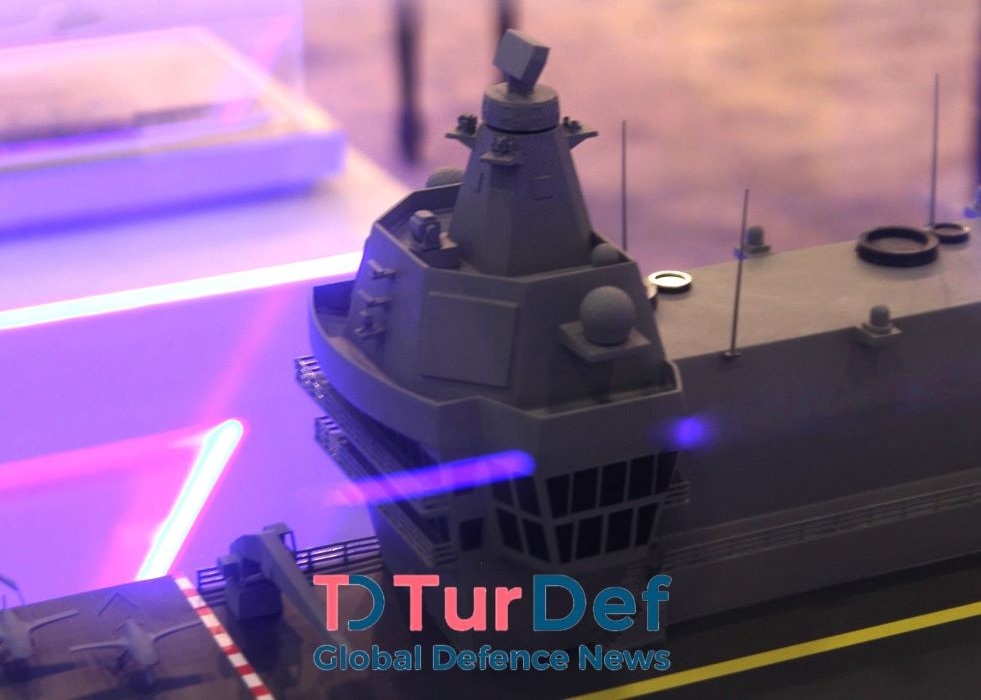
MUGEM studies were initiated after the air power projection was deemed necessary due to Ankara's changing understanding of regional interests and the seas. The planned dimensions of the platform, which is expected to have a single island in the starboard amidship, are 285 metres in length, 72 metres in width and 10.1 metres in draft. The vessel, which is targeted to reach a maximum speed of 25 knots, will be propelled by four gas turbines in COGAG configuration.
Although there is a higher specific fuel consumption rate compared to CODAG, which is preferred for Ada and Istif Class vessels, it is worth mentioning that the required power in terms of size and displacement passes through the conventionally preferred structure. On the other hand, it is known that COGAG (Combined Gas and Gas) has various gains in terms of acoustic signature and vibration.
According to official sources, the installed power will be four 23 megawatts. Two pitch-control propellers will provide the necessary propulsion with a twin-shaft interface. Thus, the shaft revolutions will be kept relatively constant at certain intervals during the cruise, preventing fluctuations and maximising fuel economy. In addition, in situations requiring back manoeuvres or slowing down the ship, the direction of the propulsion can be quickly regulated without the need for the shafts to stop completely. No clear information about the selected engines has been shared yet. However, considering the use of GE LM 2500 family gas turbines on Turkish Navy platforms, as in many other NATO components, and the shared power requirement figures, it is likely that a similar choice will be made for MUGEM.
The ship, which is planned to have a displacement of 60.000 tonnes, will be propelled with a COGAG configuration. During the voyage, two gas turbines will be used to ensure fuel economy and save consumption. In high-speed cases, the other two engines will be involved to reach 25 knots. In addition, it can be seen in the design visuals and models that the vehicle has various equipment for more stable navigation. In addition to a total of four stabilisers, two each on port and starboard, there are fins along the length between the two hulls. This way, uninterrupted operational capability is aimed even under Sea State 6 conditions. In other words, thanks to the ship's stable and stable structure, the Turkish Navy will be able to operate aircraft uninterruptedly even in 22-27 knot winds and 4-6 metre high waves.
The Turkish Aircraft Carrier is expected to reach an operational range of 10,000 nautical miles at 14 knots. This roughly translates into an operation capability without replenishment for approximately 30 days. It is among the information shared that the ship, which will also have a replenishment at sea (RAS / Replenishment at Sea) capability, like almost all modern equivalents, has been developed in a structure that can reach 60 days of operation.
It would not be wrong to say that the Design Project Office greatly used its past experience during the vessel's hull design. Thanks to multi-measure optimisation studies, the vessel's important capabilities, such as seaworthiness, stability, and manoeuvrability, were maximised. In addition, the specially designed bulb structure reduces the acoustic signature, and a 1.5 per cent fuel consumption saving is aimed at. The bow thruster added to the platform provides convenience and additional safety in harbour manoeuvres.
Crew Capacity
MUGEM is envisaged to operate with between 400 and 500 crew members. The total capacity of the ship's living quarters is expected to be around 800. An additional approximately 300 personnel are likely to be used for aviators, unmanned system operators, technicians, maintenance-technician personnel, and special force units.
Role 2-level medical infrastructure will also be established on board. This way, basic-level surgical operations can be performed when necessary. In addition to vital equipment at sea, such as a dental clinic, there will also likely be intensive care, X-rays, a basic-level laboratory, and a full-fledged infirmary structure. Looking at the general picture, it can be assessed that MUGEM will inevitably have a structure similar to TCG Anadolu (L 400) in general terms, with a high level of self-sufficiency.
Aviation Capacity
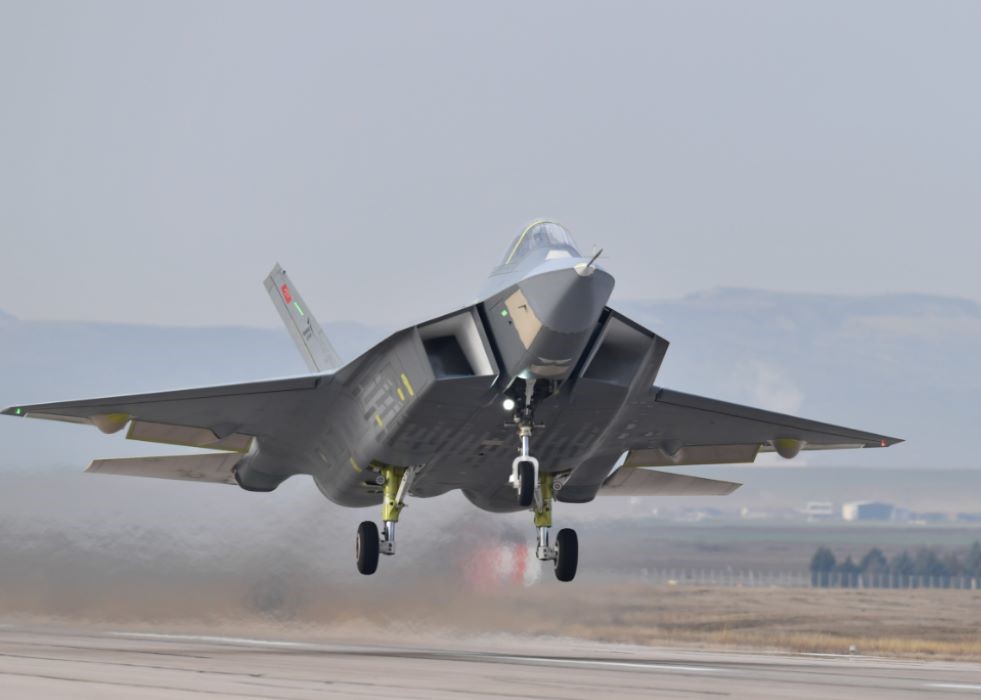
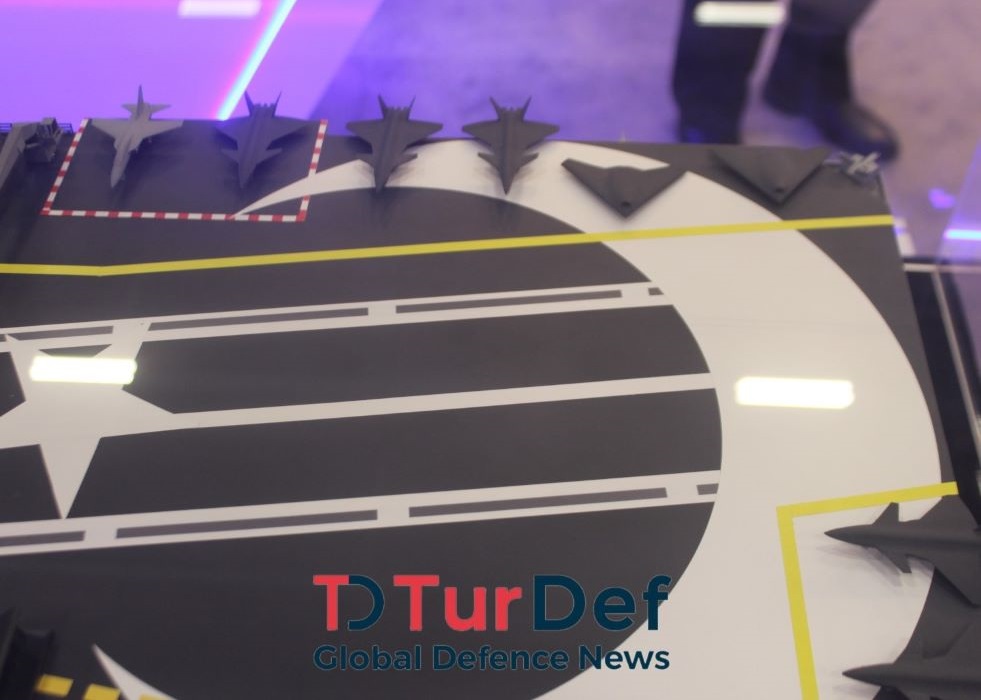
Turkiye's indigenously developed MUGEM will be able to deploy a total of 50 aircraft. The number of Hürjet, Anka-3, Kızılelma, TB-3, heavy transport, general purpose and anti-submarine warfare helicopters can vary depending on the mission requirements. Air-air and air-ground missions can be performed at certain levels with the flexibility provided by aircraft.
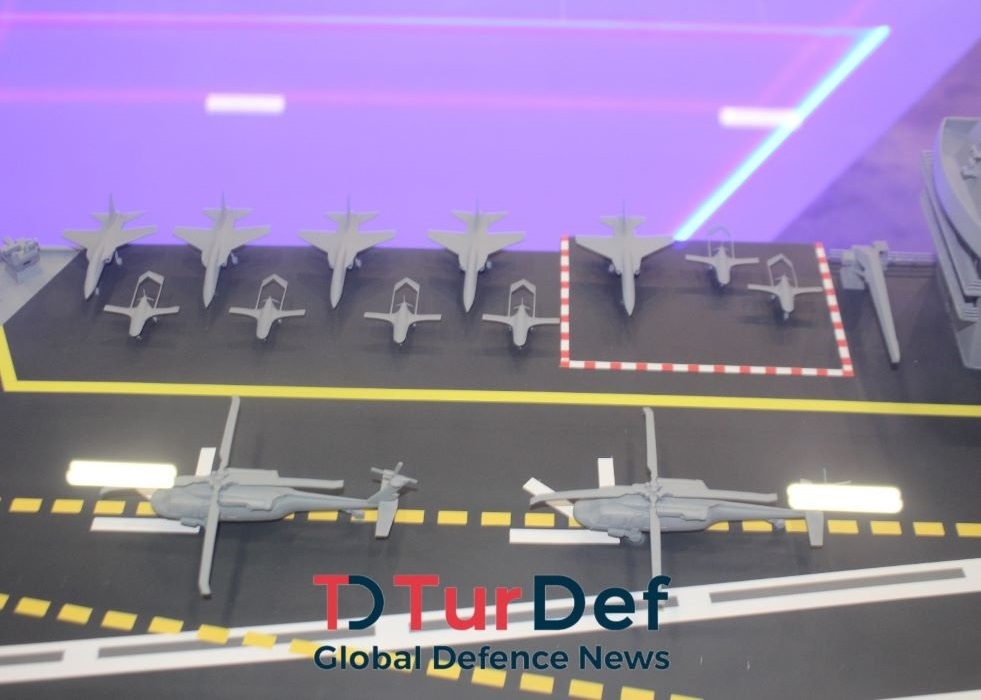
The aircraft carrier will be in STOBAR configuration. In other words, the aircraft will take off from the runway with their own engine power. However, the capture on landing will be provided by a rope system. In this way, the huge energy requirement for the catapult system will be saved. On the other hand, it is worth reminding that heavier aircraft such as the F/A-18 Super Hornet family or E-2 Hawkeye, which do not have STOVL or STOBAR capability, will be unable to operate.
Above the bow will be a ski-jump ramp, which we are accustomed to seeing today even on modern platforms such as the Queen Elizabeth class aircraft carriers. In this way, increasing the linear distance required in the take-off run will also contribute positively to the wing angle of attack, increasing the wing lift coefficient and enabling take-off from a more compact area. There are deflection plates at various positions on the runway. This will prevent the deck crew from being affected by high-temperature jet exhaust. Aircraft will be able to take off from two runways. Landing will be made on the runway, which is also located on the deck and angled to the main structure, as in almost all modern aircraft carriers. The connection between the hangar and the flight deck will be provided by lifts, one aft and one on the starboard transom. There will be a transport infrastructure separate from the armouries for ammunition delivery.
The main factor that makes an aircraft carrier an aircraft carrier is its maintenance and repair capacity. As is well known, the platforms serving in the US Navy especially have a highly developed technical infrastructure, including engine hush house tests. It is stated that MUGEM will also have sufficient aircraft and engine maintenance and repair infrastructure to ensure high combat readiness. However, the level of this infrastructure will depend on time. It is worth reminding that a basic capacity level will lead to significant weaknesses in the future.
The Turkish Naval Forces also maintain close contact with Turkish aircraft companies during design. During the negotiations, the final length of the platform was decided as a result of the notifications received that the Hürjet and Anka-3 can take off from 200 metres with a certain combat load, while Kızılelma can take off from 265 metres. In addition, the 200-metre runway, which was brought to the agenda for TUSAŞ systems, can be extended to 265 metres when taking off from the aft position. In addition, during take-off, the full speed of 25 knots and the deck wind, which will be obtained by turning the ship's face, will be utilised to facilitate take-off.
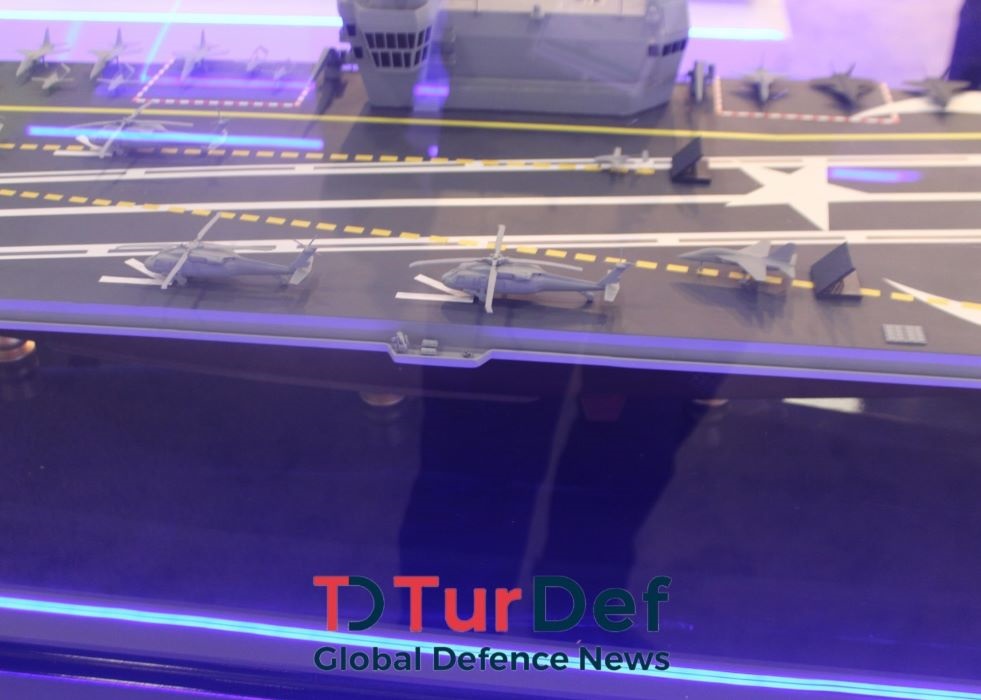
MUGEM and F-35B Lightning II
With the country's participation in the F-35 Lightning II Programme, the Turkish Navy calculated to deploy F-35B at TCG Anadolu (L 400). However, after Turkiye was pushed out of the programme due to tension with the US, STOVL supersonic jet plans were postponed until the future. At the beginning of the Turkish LHD Programme, TCG Anadolu (L 400) was planned to be equipped with a runway covering resistant to the high-temperature exhaust gas of F-35 B lightning IIs, as the aircraft were still on the agenda. TurDef has learned that this resistant layer was never applied. The uncertainty of the processes today has directly affected the design of MUGEM. Therefore, it is not expected that the Turkish aircraft carrier will initially be equipped with runway pavement suitable for F-35B Lightning II operation to save cost and weight.
Weapon Equipment
The infographics shared and the models exhibited included the Indigenous guided missile vertical launch system MIDLAS, 35-millimetre close-in-weapon system Gökdeniz, and stabilised RCWS. According to the information obtained by TURDEF, MIDLAS will be a strike model and will provide the ship with more advanced firing capability, for which fit-checks have been completed.
MUGEM, whose guided missile firing capacity will increase, will be secured with 35 millimetres against air elements and asymmetric threats. Gökdeniz, developed by ASELSAN, uses ATOM Programmable Smart Ammunition, which was also developed with its own resources. This way, barrage shots can be fired from much higher distances than conventional 20 and 30-millimetre close-in weapon systems. The tungsten fragments carried by the projectiles are programmed according to the distance data received from the radar during the exit from the muzzle. Thus, possible deviations due to high speed are minimised, and a deadly cloud is created in front of the target. Thanks to the concept, which promises higher success with less ammunition, significant gains such as reducing consumption and increasing effectiveness are achieved. Other stabilised gun turrets on the ship will protect the ship against asymmetric threats, especially from the surface. Weapon, radar, fire control, and other necessary command and control requirements will be provided by the ADVENT system, developed by Turkiye with indigenous capabilities and currently operating on MilGem platforms.
Weapons and ammunition required for defence systems and air vehicles will also be stored on specially secured and armour-protected decks located on the inner decks.
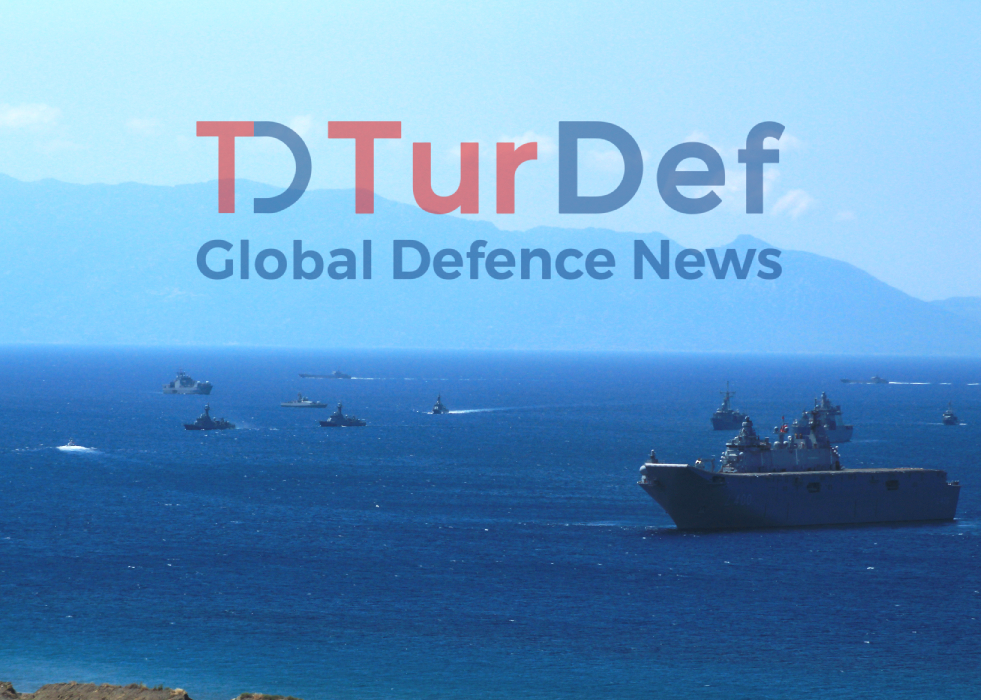
Although the subject of this article is MUGEM, the ship will participate in a task group. One of the most important parts of the aforementioned force will be the TF-2000 Air Defence Destroyer, which will be built by ASFAT and is waiting for a date for the steel-cutting ceremony. This ship will be equipped with sensor and weapon stations and unmanned surface vehicles in configurations suitable for various missions. This will pave the way for the task group to perform more effective missions with fewer personnel.
Conclusion
Turkiye is flying more flags at sea than ever before due to the Mavi Vatan Policy and the dispute over exclusive economic zones. Ankara, which wants to further increase its importance in the Eastern Mediterranean, has recently put the aircraft carrier on its agenda in addition to the LHD for power projection to overseas regions such as Libya.
MUGEM is undoubtedly an important force multiplier for the Turkish Navy with its capabilities, aircraft capacity and the power projection opportunities it will provide. For this reason, Turkiye needs to accelerate the aircraft carrier and all other naval projects and build and commission the combat and logistic support elements that will fly the flag alongside MUGEM and their spares and alternatives. On the other hand, what kind of dialogue will be established between the Turkish Navy and the Turkish Air Force regarding the operation of the jet elements, and whether this will turn into a sweet competition are among the questions that need to be answered.