EFES 2026: Turkiye to NATO? or NATO to Turkiye?
EFES 2026: The Turkish Armed Forces from Cyprus to NATO
Part I: The Aegean Army, Development and the Efes Exercises
The Turkish Armed Forces completed the Efes 2026 Exercise last week. Domestic systems and weaponry manufactured by the Turkish defence industry were also extensively used during the operation.
The Turkish Armed Forces completed the Efes 2026 Exercise last week. In this exercise, which stands as one of the finest examples of the Multi-Domain Operations doctrine, the extensive use of domestically produced weapons and systems is a factor that secures the future for the Turkish defence industry and the Turkish Armed Forces.
From Roots
In order to comprehend the substantial changes that will become clearly apparent in Efes in 2026, one must also be cognisant of the developments that took place in the past. The "National Defence Industry" breakthrough, which commenced in the early years of the Republic of Turkiye, lost momentum by the 1950s due to the Marshall Plan and was replaced by military systems supplied by the NATO and the USA. The lessons hardly learnt from the limitations and scarcity endured during the Turkish War of Independence were quickly consigned to the dusty shelves of history. This made the long-standing crisis in Cyprus all the more difficult for Ankara to resolve. The Treaty of Guarantee, which was signed in Zurich in 1959, designated Turkiye as the guarantor of Cyprus. It is evident that the issue of defending Turkish citizens on the island has gained a legal basis after that agreement, thereby rendering the necessity for potential intervention more pressing and real than ever before. In President Lyndon B. Johnson's 1964 letter, which was in complete breach of diplomatic decorum and etiquette, the warning that no American-made weapons or equipment could be used in a potential Turkish operation has gone down in military history as one of the most significant turning points for the Turkish Armed Forces (TAF).
In the aftermath of the coup on the island and the intervention in Cyprus by the Greek military junta in 1974, the declaration of ENOSIS, and attacks by terrorist elements against Turkish citizens, Turkiye exercised its right as a guarantor power and launched the Cyprus Peace Operation, a name that aptly reflects its nature. Despite the extensive preparations, which took of more than a decade, the Turkish Armed Forces conducted operations by air and from sea, serving as a prime exemplar of the combined arms warfare and amphibious warfare concept, despite having extremely limited resources and capabilities. An air cavalry operation, which deployed from Silifke, was executed to ensure the security of the other two operations and to provide support in conjunction with the amphibious landing at Yavuz (Pladini) Beach, and airborne operation primarily in the Kırnı region.
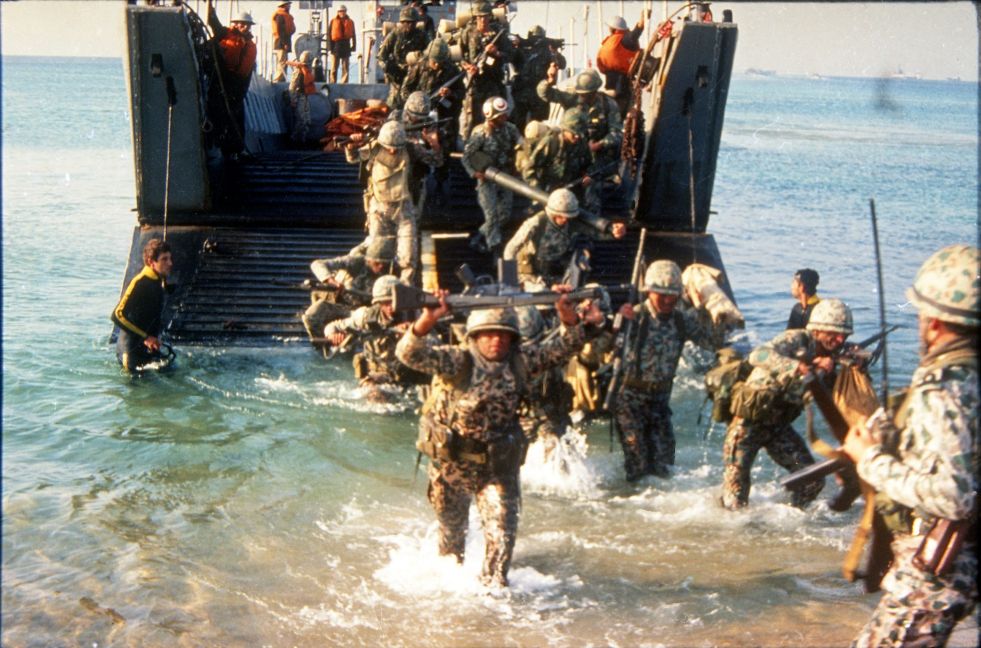 Despite the exercise of the legal rights conferred by the Treaty of Guarantee, Ankara was subjected to an embargo following the 1974 Cyprus Peace Operation, due both to the military operations on the island and to various political issues. During the most turbulent years of the Cold War, Turkiye, a NATO country, experienced a decisive turning point in terms of rebuilding and strengthening its domestic defence industry. This was marked by a period of significant military strength and capabilities, which was subsequently deprived by the pressure of another NATO member state.
Build Your Own Aircraft
Notwithstanding Turkiye's membership of NATO and the escalating Soviet threat, the Turkish Armed Forces were subjected to a systematic embargo in the period following the Cyprus Peace Operation. This course of action was prompted by the belated realisation that the establishment of an independent military is contingent upon the presence of an independent defence industry.
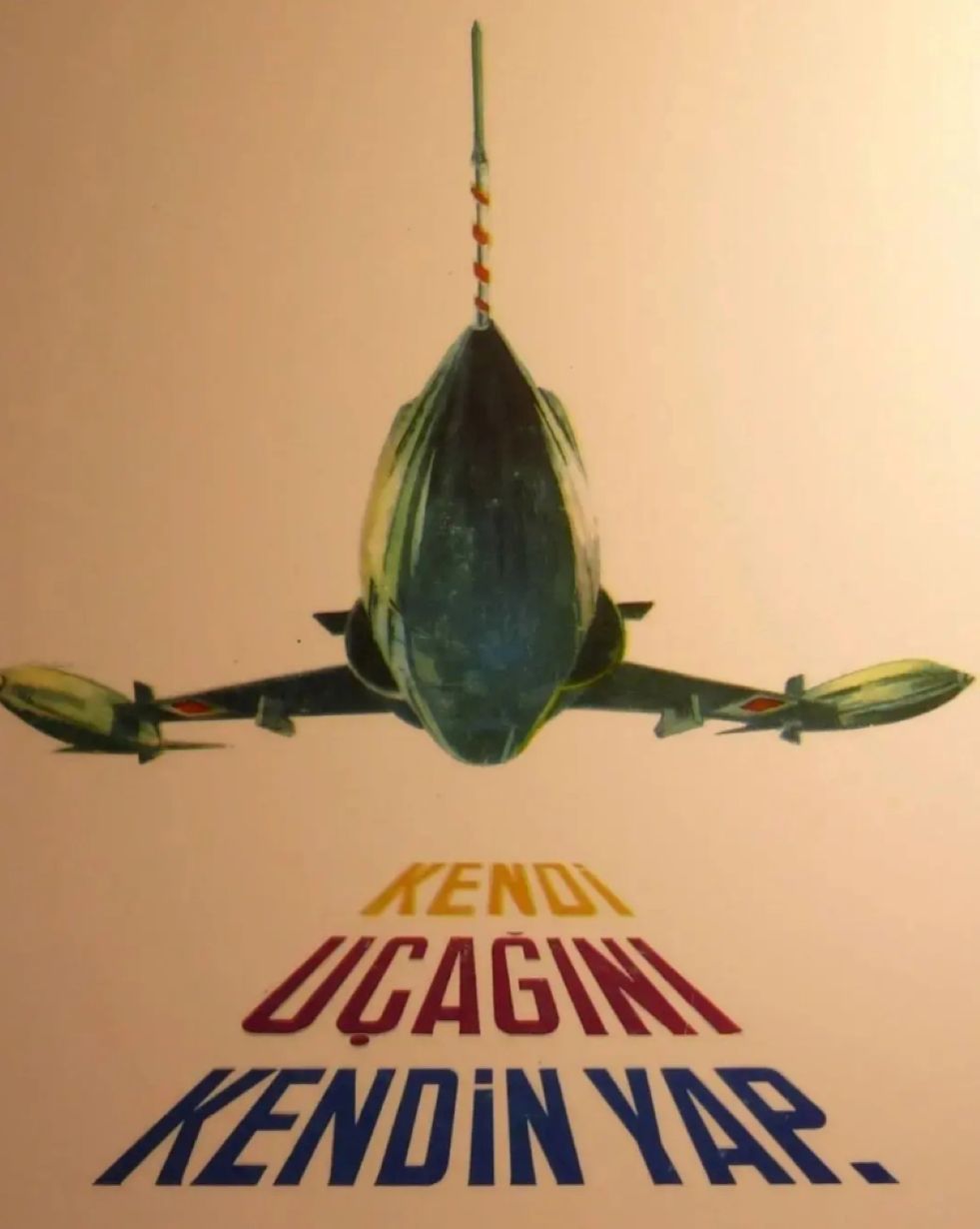
The foundations of ASELSAN (Military Electronics Industry) were first laid in 1975. Instead of the scattered efforts currently underway to equip the army using domestic resources, a more systematic approach has been adopted. Initiatives launched under the slogans "Build Your Own Aircraft" and "Build Your Own Ship" have been brought together under the umbrella of the "Turkish Armed Forces Foundation". A collaborative network of companies has been established to address the Turkish military's demands for electronics, software, aircraft, batteries, ammunition, and other essential supplies. Moreover, the foundation and its subsidiaries have been placed under the protection of a law enacted to provide legal safeguards for the domestic arms industry, drawing on lessons learnt from past unfulfilled initiatives.
Aegean Army
Following the military coup in Greece, the Junta, also known as Colonel's Regime came to power. Furthermore, the rigid policies pursued by the government of Athens between 1967 and 1974 served to disrupt the prevailing balance of power within the regional context. The escalating violence in Cyprus resulted in Turkiye invoking its Right of Guarantee and launching the Peace Operation on the island. Following the operation, Greece’s withdrawal from NATO raised the prospect of a potentially aggressive stance. In the aftermath of a series of couos and international political manoeuvres, Ankara determined that the establishment of a defensive force in the Aegean was imperative in anticipation of a potential attack. In response to the rapid developments and strained relations, the Turkish Armed Forces established the Aegean Army Command on 20 July 1975, the anniversary of the Cyprus Peace Operation. The unit, otherwise designated the Fourth Army Command, was constituted in response to the security situation that ensued in the aftermath of Turkiye's intervention on the island. In summary, the concept of establishing a military entity capable of operating independently of the NATO command structure to defend Turkiye's Aegean coastline, amidst the ongoing tensions with Greece, forms the core of the Aegean Army.
Despite Greece's subsequent re-admission to NATO, the issue of armament in the Aegean Islands, a violation of the Treaty of Lausanne, once again became a prominent concern. Turkiye's official policy is not to perceive Greece as a hostile. Since the early years of the Republic, policies have been pursued with the aim of cultivating close neighbourly relations. Conversely, it would have been unreasonable to expect the Turkish side to allow Athens to rejoin NATO. However, as Greece's stance remained unchanged in the years that followed, a mechanism was established through the Aegean Army that would not plunge NATO into a crisis. Naturally, the concept of the Aegean Army remains a salient component in Ankara's political discourse. From these perspectives, the Fourth Army Command may be regarded as a military entity whose primary function is the training and defence purposes.
The primary function of amphibious and airborne units is often considered to be the execution of offensive operations. However, in circumstances where they are unable to conduct operations directly by land, countries may, on occasion, resort to these two measures for defensive purposes, such as to safeguard their political interests or to defend their compatriots. The Cyprus Peace Operation, as its name suggests, can be described as a joint forces operation carried out precisely for this reason. The Turkish Armed Forces demonstrated to NATO, an alliance whose primary purpose is not offensive, how an offensive force can be used for defensive purposes in Cyprus in this manner.
The lessons learnt in Cyprus, in conjunction with the evolving security dynamics in the Eastern Mediterranean and the Aegean, have shaped the rationale behind the formation of this unit; in line with Turkiye’s national requirements, deterrence, coastal defence and warfare, the neutralisation and prevention of potential amphibious landing attempts, and the conduct of amphibious operations when necessary now take centre stage. It is for this reason that training and planning aimed at achieving these objectives are of far greater importance than in other branches of the armed forces. The Fourth Army is regarded as a reliable regional power by Turkiye and the states with which it maintains close relations. This is due to its organisational structure, subordinate units, doctrinal framework, training and exercise activities it conducts both domestically and with friendly and allied nations. In summary, the key differences lie in the deployment status, the ability to operate independently of the NATO command structure, the operational concept and the mission statement; the definition of a special-purpose field force, and the Aegean Army, which has played a critical role in deterrence in the region since its establishment.
Importance
The region's geological structure necessitates a response capability to address the ongoing violations of air and maritime space, caused by the militarisation of islands in the immediate vicinity. Despite their non-military status, these islands have been subject to such violations, as well as unilateral claims. The Aegean Army has units that are capable of rapid deployment to any desired location and the undertaking of action, as opposed to reliance on unwieldy units in this particular context. In summary, the Aegean Army was conceived with the intention of operating with maximum freedom of movement within the national chain of command, without being subject to the restrictions imposed by NATO alliance directives. Conversely, disparities in inventory management, organisational structure and allocation strategies can yield a competitive intelligence advantage. In other words, as part of a strategic doctrine, the maintenance of military capabilities within a state of strategic uncertainty is intended to undermine a potential adversary's information superiority. Moreover, a further salient factor pertains to the capacity to undertake fully integrated joint operations with the naval and air forces, a capability facilitated by its amphibious characteristics, a feature that distinguishes it from the other three branches of the armed forces.
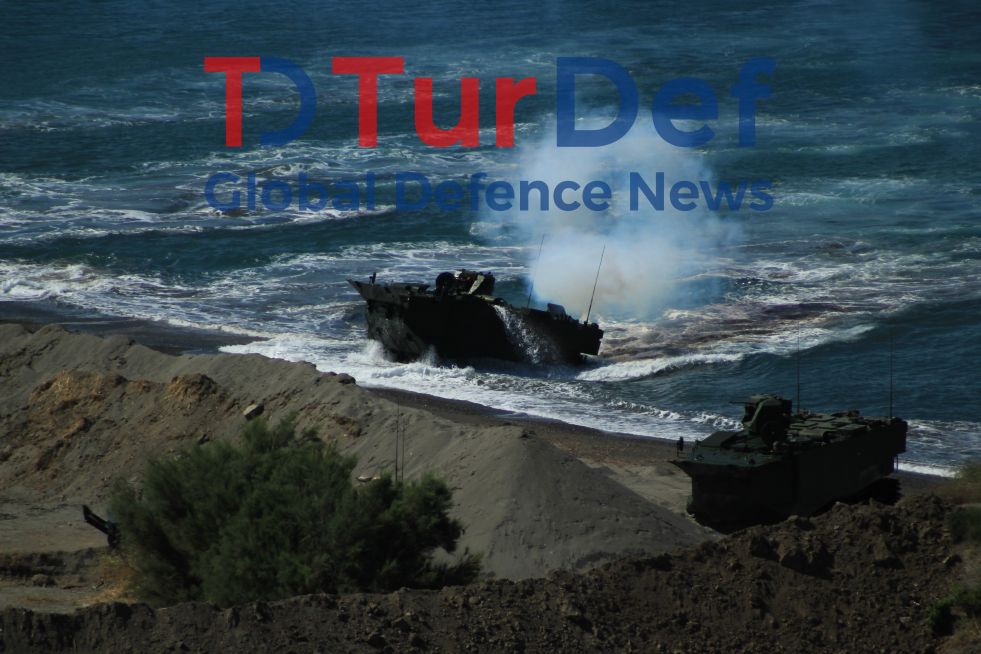
The structure operates on the principle of absolute deterrence, which aims to prevent potential conflict through a credible display of force rather than by winning a war. The incompatibility of traditional military doctrines with geographical constraints necessitates the deployment of coastal defence systems in the Aegean, the operation of unmanned air, sea and land vehicles, electronic warfare systems, and new weapons and methods designed to disrupt the enemy's logistics network. These asymmetric requirements are driving a process of modernisation not only across the Turkish Armed Forces but also in the region.
Efes 2026 and Transformation
The Efes Exercises, which form part of the Turkish Armed Forces’ routine activities, were originally organised with the aim of maintaining the capability for combined arms warfare involving amphibious, naval, land and air elements. However, the dynamic and evolving character of warfare also manifested itself in Efes Exercises. In accordance with the endeavours of the Turkish Armed Forces to harmonise their practices with the doctrines that emerged during the latter phases of the Cold War, a series of structural and operational modifications commenced at Efes. Warships, weapons, unmanned systems, electronic warfare, digital combat solutions, battle management systems and digital transformation -all of which are developed using domestic capabilities- are beginning to permeate every aspect of operations and are becoming visible in the field.
Evidence of this is also clearly apparent in the documentation made available to the press regarding the Efes 2026 Exercise. In an official statement released by the Ministry of National Defence, the objectives of the operation were articulated as follows:
· Testing and development of command and control procedures, electronic warfare tactics and techniques, and procedures for the control and management of airspace,
· Ensuring the effective use of Tactical Data Link Systems,
· Testing the procedures, tactics, capabilities and techniques for the joint use of combat weapons and equipment in the inventories of the participating countries’ Army, Navy and Air Force,
· Establishing a common understanding of cyber security within the framework of cyber defence,
· Developing the capabilities and capacity to jointly counter asymmetric threats and conduct hybrid operations,
The exercise has evolved into a training ground, with a total of 10,388 personnel participating. It has attracted over 1,305 foreign guests from 50 friendly and allied countries, as well as the involvement of military and civilian institutions and organisations.
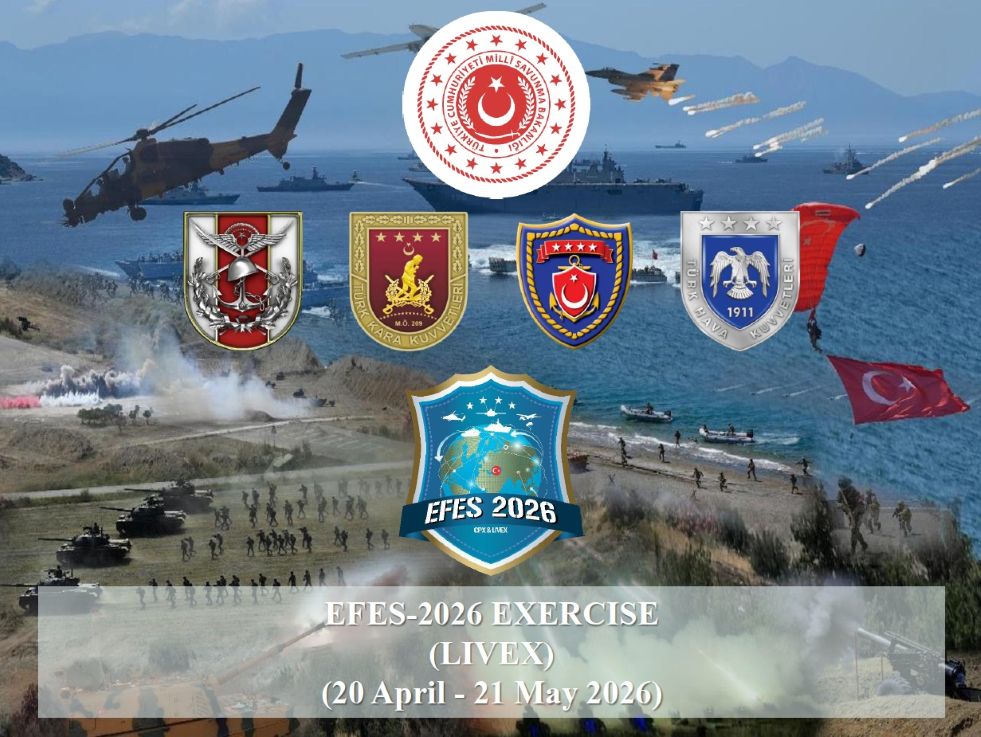
The second section of the article examines the transformations taking place at Efes 2026. You can access the study via the link.
Author: Halil Zanapalıoğlu
Editor: Özgür Ekşi