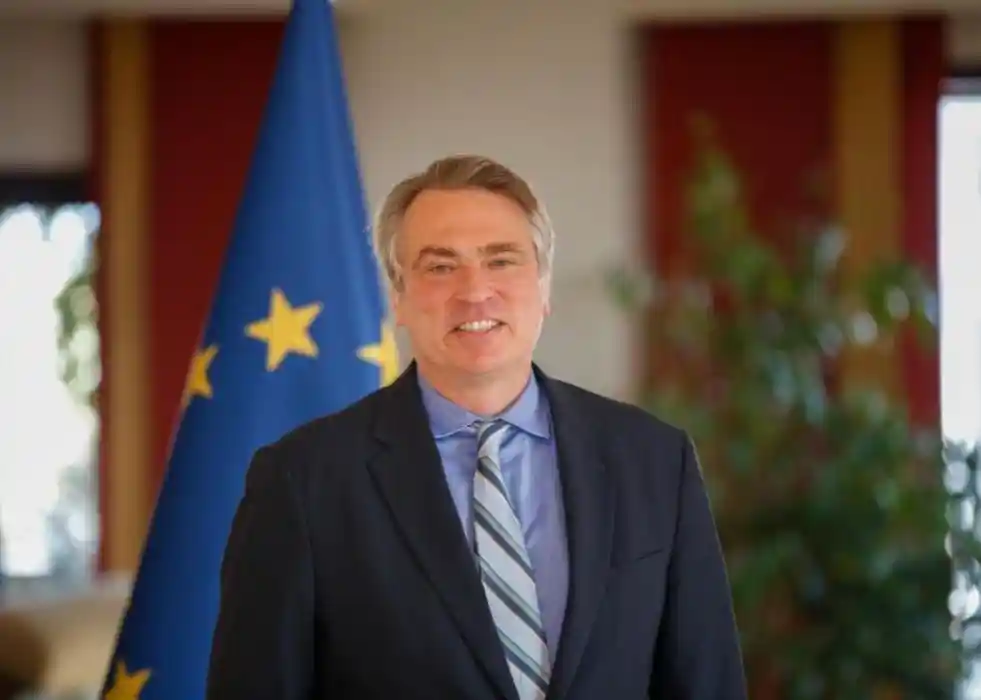
European Union Ambassador to Ankara Thomas Ossowski will attend IDEF for the first time, reflecting Brussels’ growing interest in Türkiye’s expanding defence role.
Thomas Hans Ossowski, the European Union’s Ambassador to Ankara, is expected to attend the IDEF defence industry fair in Istanbul next week. According to information obtained by TurDef, this will mark the first time an EU envoy officially participates in a defence industry event held in Türkiye.
Ossowski, who used to be Germany's ambassador to Moldova and held high-level diplomatic positions in the EU, will now be the first to work with Türkiye's defence industry at IDEF. His planned presence shows that Brussels is changing how it acts about Türkiye's rising involvement in defence in the region and beyond the Atlantic.
Russia's full-scale invasion of Ukraine has made the EU more interested in working together on defence. Alarmed by the possibility of further destabilisation, many European governments accelerated defence investments and sought deeper industrial cooperation with reliable NATO partners—Türkiye among them.
In March 2024, the European Commission launched the SAFE (Strategy to Boost the European Defence Industry) initiative to strengthen the EU’s defence industrial base and reduce strategic dependencies. The programme encourages cooperation with third countries, provided they support EU values and contribute to European security.
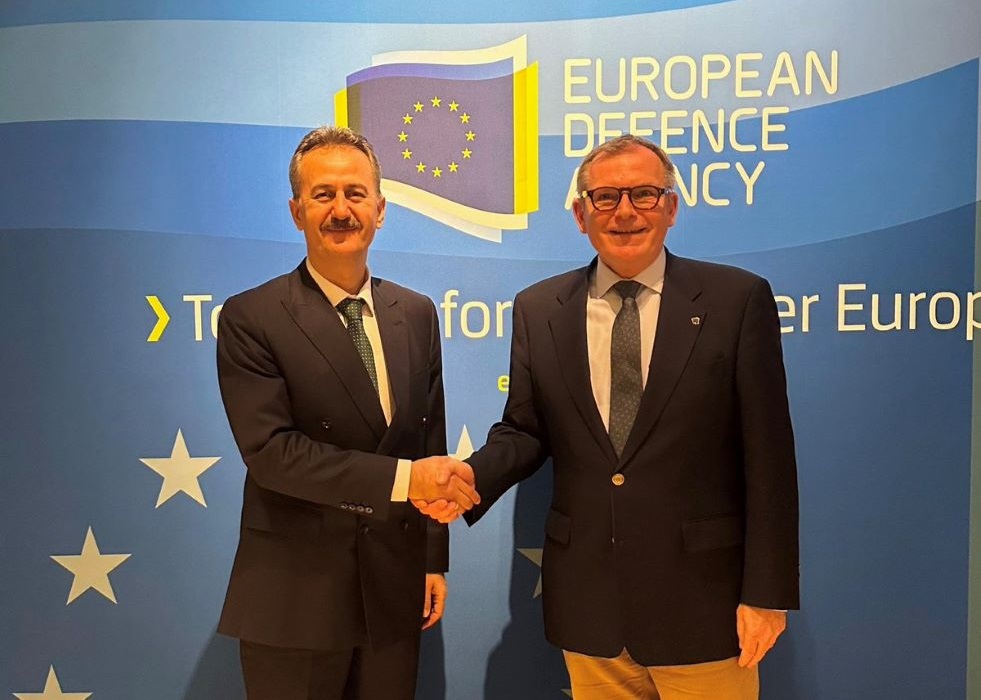
At the same time, Türkiye has been working hard to enhance its defence capabilities by reaching out to NATO and EU organisations. In the last several months, Secretary of Defence Industries Haluk Görgün has gone to Brussels and The Hague. There, he met with NATO Secretary General Mark Rutte, EDA Director Jiří Šedivý, and NSPA General Manager Stacy Cummings. Görgün stressed Türkiye's willingness to provide modern, NATO-compliant technology for cooperative projects and key supply chains during these discussions.
The European Union, facing structural limitations in defence production, is increasingly looking to partners like Türkiye to bridge capacity gaps. While European countries have funding, many face shortages in skilled defence-sector personnel and must reverse years of underinvestment. Türkiye’s proven platforms and scalable industrial base have emerged as a viable alternative for fast-tracked cooperation.
Author:Özgür Ekşi