Over the last few years, Ireland has made several acquisitions for its military, signifying a shift in firepower and threat perception due to Russia’s actions.
Following a realisation that peaceful neutrality may not be an option in the years to come, Ireland has launched an effort to revise its armed forces from a national guard force to a full-fledged one capable of responding to a military threat. The last purchase order came from the US. The DSCA approved $46 million worth of Javelin anti-armour launchers and missiles to Dublin.
The need to upgrade the firepower came to the spotlight following various incursions by Russian bombers, submarines, and intelligence ships. These incursions’ disturbances peaked with a Russian Navy drill in the Irish Exclusive Economic Zone (EEZ).
Ireland holds a critical position in today’s world as a key telecommunications hub between the US and Europe due to its proximity to major undersea cables. This has partly led to Russia testing Ireland’s borders both literally and metaphorically by passing its air and naval assets near or even through Ireland’s territorial waters. In one case, RAF Eurofighter Typhoon aircraft had to intercept a flight of Russian strategic bombers on the west coast of Ireland.
Breakout of the Russo-Ukrainian War and Russia’s frequent pestering culminated in a wake-up call for Ireland to reconsider the structure and role of its armed forces.
Starting a New Page in Ireland’s Defence
The Irish Commission on the Defence Forces (CoDF) published a report in 2022, suggesting a structural change for the Air Corps and Naval Service to the Air Force and Navy as well as up-armament for the army.
The report defines three levels of ambition (LOA), each with different tiers of capabilities.
The LOA 1, from which Ireland is in the process of making a jump, can be defined as keeping the status at the time of the report.
Solid steps have been taken for LOA 2, which consist of new equipment, setup of early warning radars, more extensive maritime surveillance capabilities, upgrade of the surface fleet, and an expanded fleet for airborne transport.
Ireland has already allocated a budget for the acquisition of at least three early warning radars with a range exceeding 500 km shortly after the report (or rather the declaration).
On the other hand, an important investment in maritime surveillance has been made with the acquirement of two C295 MPA equipped with Israeli M-2022 multi-function radar.
For improved close air support capabilities, Ireland has signed an agreement for the HForce fire control system to be integrated into H145M helicopters in early 2025, as reported by Janes. HForce allows for the use of gun pods, unguided/guided rockets, and ATGMs from the H145M helicopter, turning it into a light attack helicopter effectively.
On the ground, the troopers will receive FGM-148 Javelin man-portable medium-range ATGMs from the US, which can respond to landings of Russian armoured units in the event of aggression.
One might see that some things are still missing. These are included in the LOA 3, which includes the acquisition of combat aircraft, heavy armoured vehicles, and a fully functional naval fleet with at least 12 warships.
Turkiye’s Potential in Ireland’s Reinforcement
Alongside European countries and the US, Turkiye can also answer the requirements in Ireland’s up-armament to protect its sovereignty. While European suppliers would favour countering Russia in cooperation with Ireland, the US policies stand on a rather slippery floor with sudden shifts in alignment.
One advantage Turkiye holds over the current suppliers is the cost-performance scale, which has been among the main factors contributing to Turkiye’s climb in the global market.
With multiple firms building warships of different classes and armoured vehicles, Turkiye’s aircraft portfolio also aligns with Ireland’s plans.
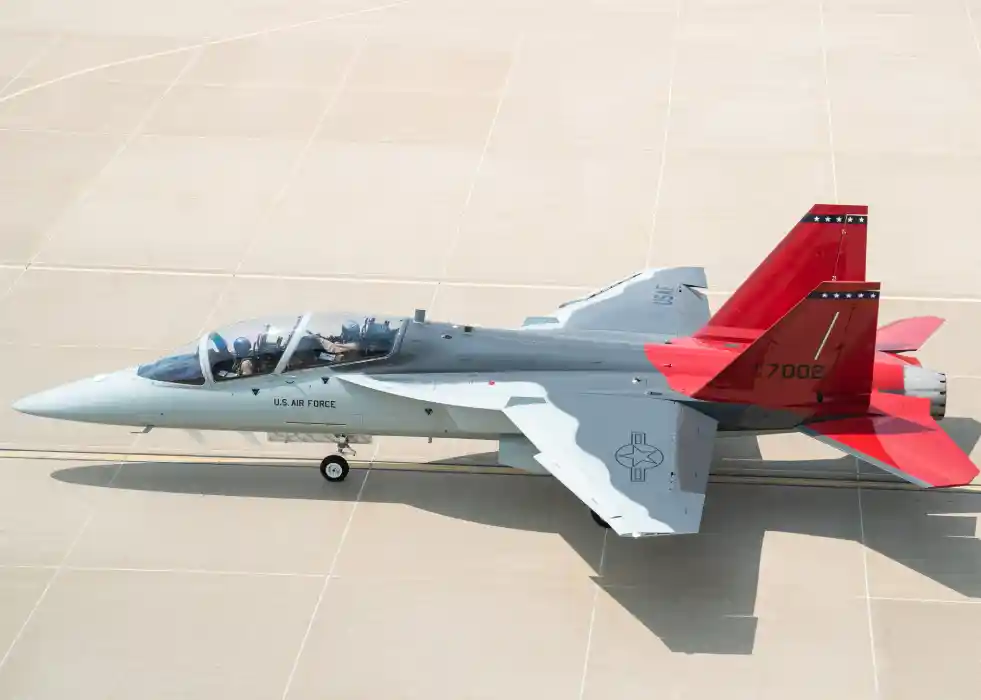
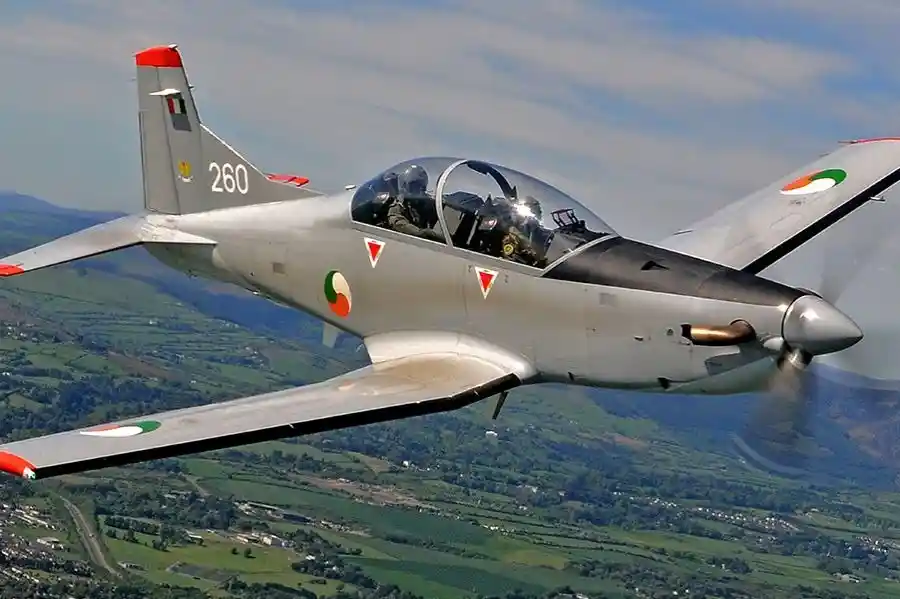
For example, TUSAŞ’s Hürjet and Hürkuş, which are trainers that can be refitted for combat roles, can provide Ireland with self-training capability and core combat capabilities from close air support to counter-air patrol/interception. Hürjet from this duo is already anticipated as Spain’s next advanced trainer aircraft to succeed the fleet of F-5s.
Additionally, with the diverse inventory of UAVs/UCAVs and related payloads, Ireland expanded both its surveillance and strike capabilities against aggressions.
Additionally, local production opportunities and transfer of technology (ToT) can allow Ireland to sustain and further develop its capabilities. The matter of self-sustainment in areas like ammunition manufacturing has shown its importance during the Russo-Ukrainian War.
All things considered, Ireland has set wheels on a road that will take years to ensure the defence of its sovereignty in a world with a highly volatile geopolitical atmosphere. Solid steps can be observed from the latest acquisitions to fill the important gaps, especially in wide-scale surveillance and basic-level firepower. Given the financial factors and stances of major suppliers prone to change, it will also be important to evaluate alternative suppliers while travelling this road.
Author: Kaan Azman
Editor: Özgür Ekşi