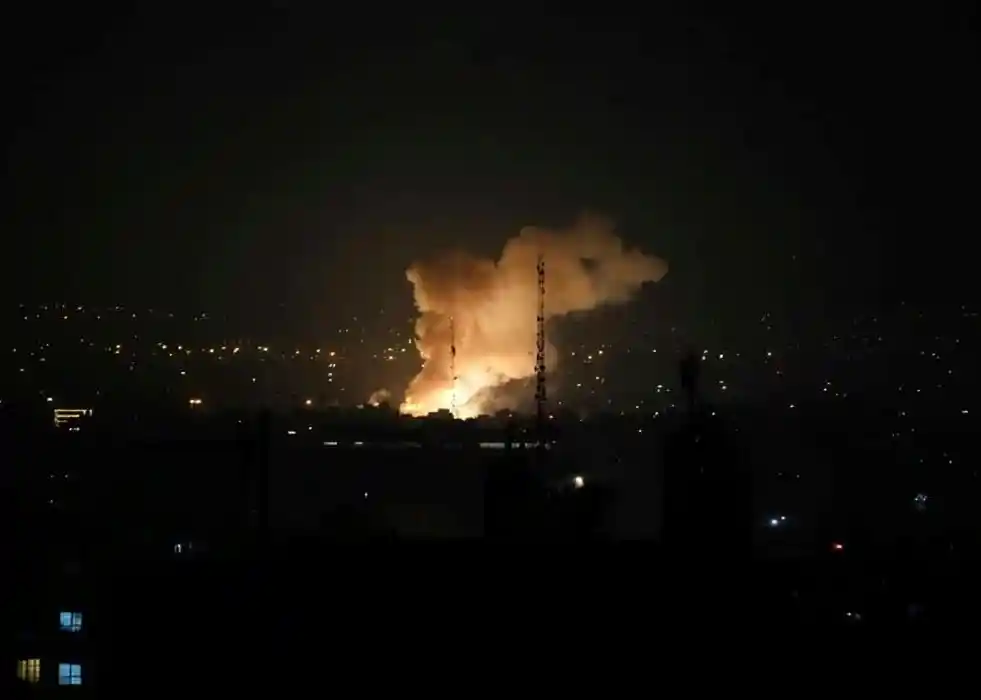
Israel says it hit on Friday the “heart” of Iran’s nuclear weapon program, killing senior officials. Explosions reported near Natanz; IAEA calls for restraint.
Israel launched coordinated airstrikes on Friday, claiming to have targeted the “heart” of Iran’s nuclear program. Iranian state media reported explosions in residential areas and around Tehran, with key military and nuclear figures allegedly killed.

Iranian news sources claim that a hit on Tehran killed Chief of General Staff Mohammad Bagheri, IRGC Commander Hossein Salami, former director of the Atomic Energy Organisation Fereydoon Abbasi, and Islamic Azad University Rector Mohammad Mehdi Tehranchi.
The Israeli military reported that Iran has sent roughly 100 drones against Israel before.
Israeli media claimed all drones were intercepted. Following the attacks, a state of emergency was declared in Israel.
The United States denied any role in the operation, although reports suggest coordination with Israeli officials. President Donald Trump confirmed that Washington had prior knowledge but did not provide assistance. Secretary of State Marco Rubio also denied U.S. involvement.
The International Atomic Energy Agency (IAEA) determined that Iran’s Bushehr nuclear power project was not attacked. There has been an explosion at the Natanz nuclear complex, which is around 225 kilometres south of Tehran. No increase in radiation was observed, Iranian sources said.
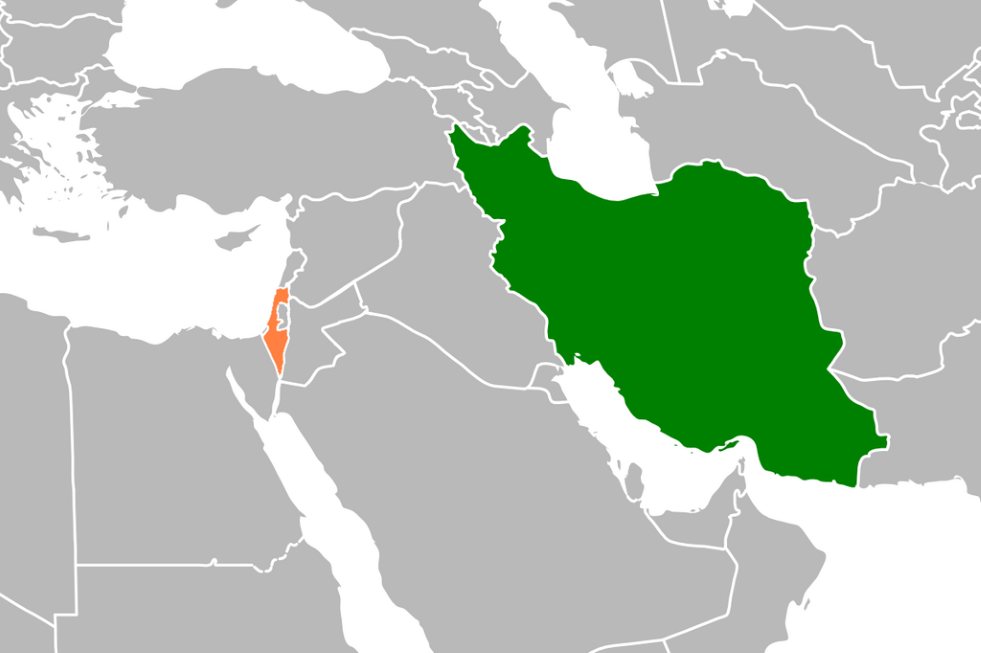
Israeli Prime Minister Benjamin Netanyahu described the assault, dubbed “Operation Rising Lion,” as a targeted military action to neutralise Iran’s threat to Israel’s existence.
The Israeli Air Force said they had destroyed many Iranian air defence radars and launchers for surface-to-air missiles.
The Turkish Ministry of Foreign Affairs called the Israeli attacks “a clear violation of international law” and “a provocation serving Israel’s destabilisation strategy in the region.”
Rafael Grossi, the Director General of the IAEA, said he was very worried and repeated that “nuclear facilities must never be attacked under any circumstances.”
The IAEA said earlier this week that Iran had broken its promises under the Non-Proliferation Treaty (NPT) as of June 12. Iran rejected the assessment, saying it was based on fake materials given to it by Israel. It also promised to “significantly increase” its uranium enrichment. Iran says that its nuclear program is not for making weapons but for generating electricity for civilians.
However, similar enrichment technology (typically gas centrifuges ) can be used for both purposes, depending on intent and process with different enrichment levels. Low-enriched uranium (LEU), which is normally 3–5% U-235, is needed for nuclear power reactors. To make nuclear bombs, you need highly enriched uranium (HEU), which is usually more than 90% U-235.
This means a facility for LEU can, in theory, be repurposed to produce HEU. Therefore, the dual-use nature of enrichment technology is a central proliferation concern.
Author:Özgür Ekşi