The Turkish Navy has confirmed a 2032 delivery target for its aircraft carrier, revealing new details on construction progress, sensors and combat systems.
The timeline was disclosed during the Combined Naval Event (CNE) 2026 conference in Farnborough, United Kingdom, where Rear Admiral Hakan Uçar of the Naval Technical Command presented an update on the programme. The details were first reported by Naval News, which published several slides from the briefing.
Beyond confirming the delivery date, the presentation offered one of the most detailed public snapshots of the programme to date, revealing new information on construction progress, combat systems, sensor architecture and the vessel's future role in unmanned naval operations.
Construction progresses toward 2027 launch
Slides presented during the briefing confirmed that construction is actively underway at Istanbul Naval Shipyard.
Photographs shown by the Turkish Navy revealed major hull sections already assembled, providing visual evidence that the programme has moved well beyond the design phase and into large-scale construction.
According to information obtained by TurDef, current planning foresees the vessel being launched in autumn 2027. The carrier is expected to enter the water with all four GE LM2500 gas turbines already installed. Following launch, the ship will undergo an extensive fitting-out period, system integration process and sea trials before its planned delivery in 2032.
Block-construction approach mirrors Queen Elizabeth programme
The pace of construction also appears consistent with a modular shipbuilding approach previously employed on major aircraft carrier programmes.
(Photo Credit: Naval News)
TurDef has previously reported that MUGEM is expected to follow a block-construction methodology similar to that used for the Royal Navy's Queen Elizabeth-class aircraft carriers. In the British programme, major sections of the ships were constructed separately at six shipyards before being transported to Rosyth for final assembly.
In the British programme, major sections of the ships were built at six shipyards across the United Kingdom before being transported to Rosyth for final assembly
While no information was shared during the briefing regarding participating partner shipyards for MUGEM, the appearance of large pre-assembled sections in the latest photographs suggests that a similar modular construction philosophy may be playing a role in the programme.
Indigenous combat architecture takes shape
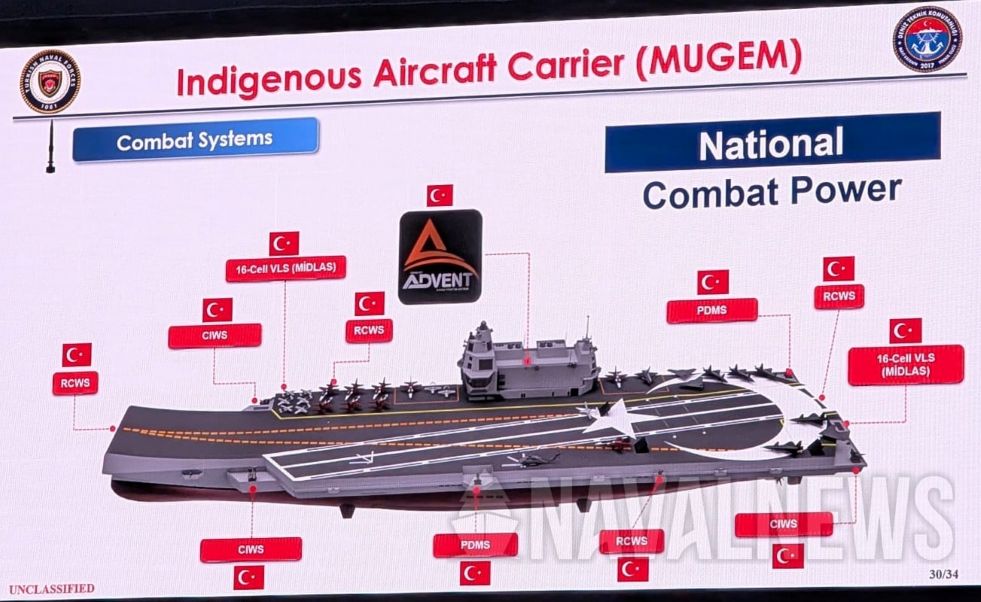
The briefing also revealed that MUGEM is being designed around an overwhelmingly indigenous combat architecture.
(Photo Credit: Naval News)
Slides showed the carrier equipped with the ADVENT combat management system, MIDLAS vertical launch systems, close-in weapon systems (CIWS), point-defence missile systems (PDMS) and remote-controlled weapon stations.
The configuration suggests that the vessel will possess substantial self-defence capabilities against aircraft, missiles and unmanned threats while relying heavily on Turkish-developed technologies.
(Photo Credit: Naval News)
National sensor suite planned
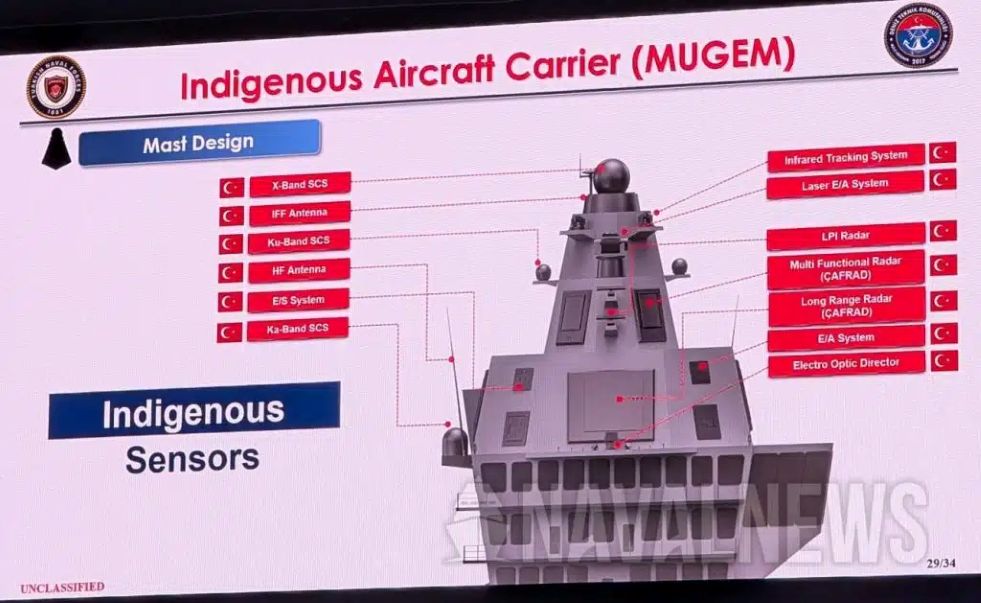
Additional slides outlined an extensive indigenous sensor package.
The mast design includes elements of the ÇAFRAD radar family, including multifunction and long-range radar systems, alongside a low-probability-of-intercept (LPI) radar, infrared tracking systems, electro-optical directors and electronic attack capabilities.
The presentation also identified indigenous satellite communication systems operating in X, Ku and Ka bands, as well as national IFF and electronic support systems.
Together, the slides indicate that both the carrier's sensor architecture and combat systems are expected to be overwhelmingly Turkish developed.
(Photo Credit: Naval News)
More than an aircraft carrier
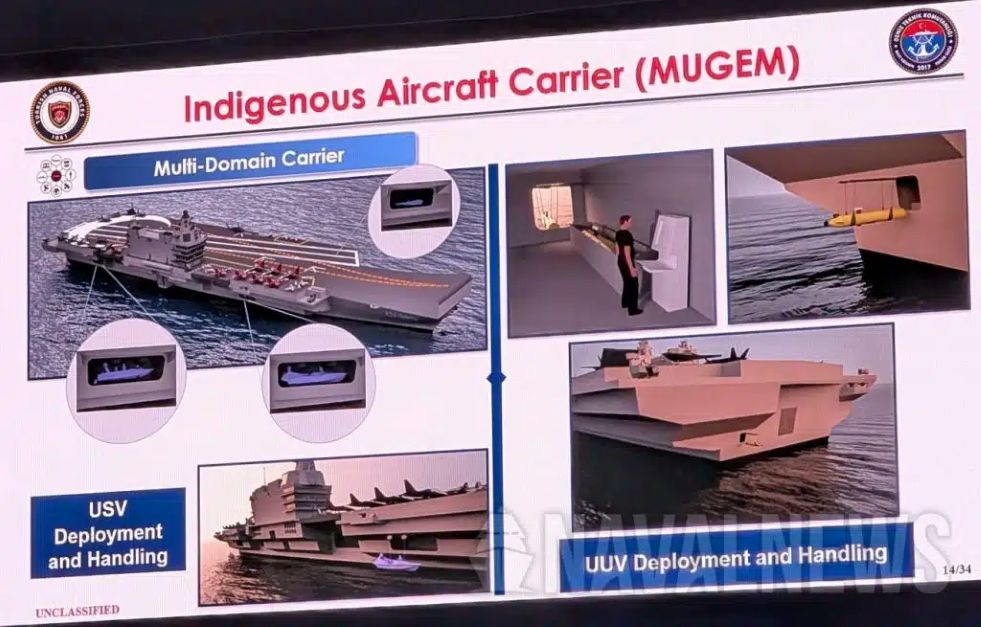
One of the most notable aspects of the presentation was the Turkish Navy's description of MUGEM as a "Multi-Domain Carrier".
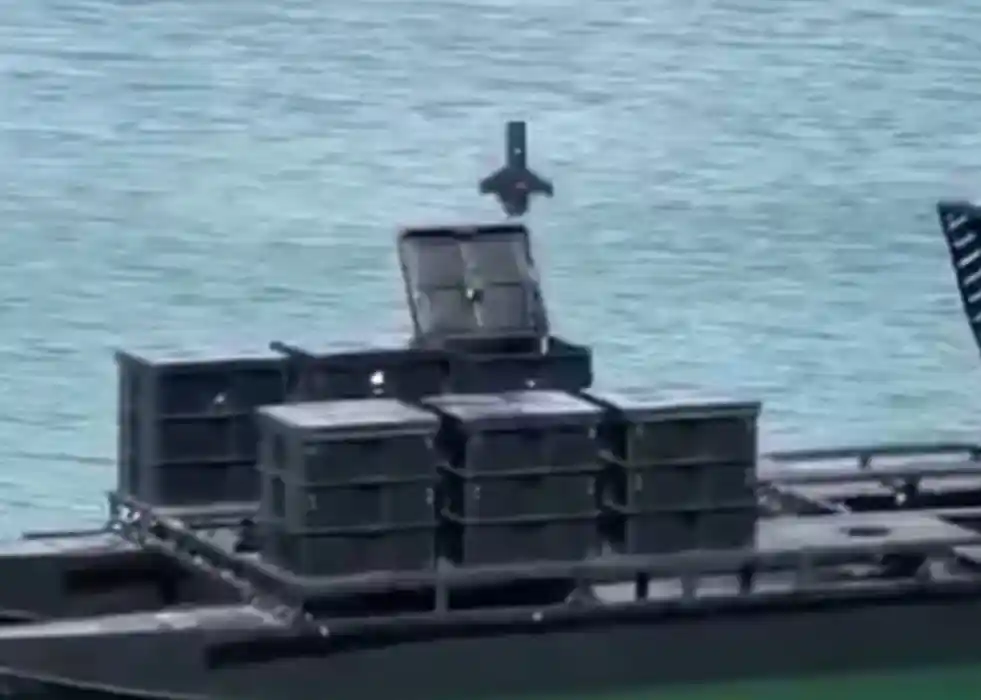
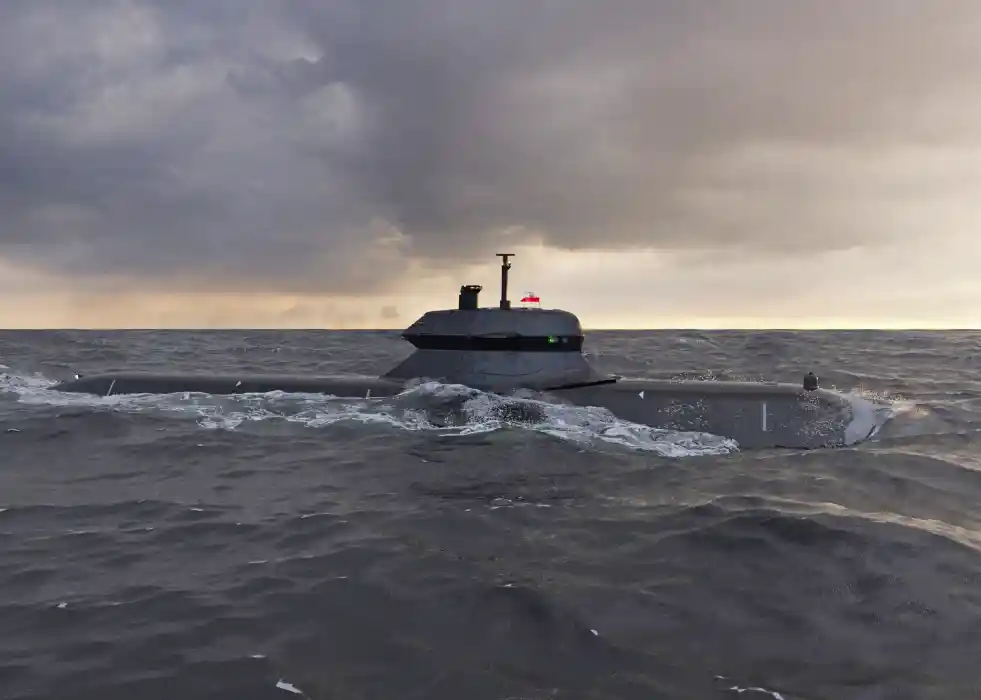
Slides showed dedicated arrangements for deploying and recovering unmanned surface vessels (USVs) and unmanned underwater vehicles (UUVs), suggesting that the ship is being designed to serve as more than a conventional aircraft carrier.
The concept envisions MUGEM acting as a mothership capable of operating crewed aircraft, unmanned aerial vehicles, unmanned surface craft and underwater drones from a single platform. Dedicated command facilities shown in the presentation indicate that the vessel could coordinate maritime drone operations while simultaneously conducting carrier aviation missions.
This approach reflects the Turkish Navy's growing emphasis on integrating unmanned systems into future naval operations and could make MUGEM one of the most ambitious multi-domain carrier projects currently under construction.
A flagship programme
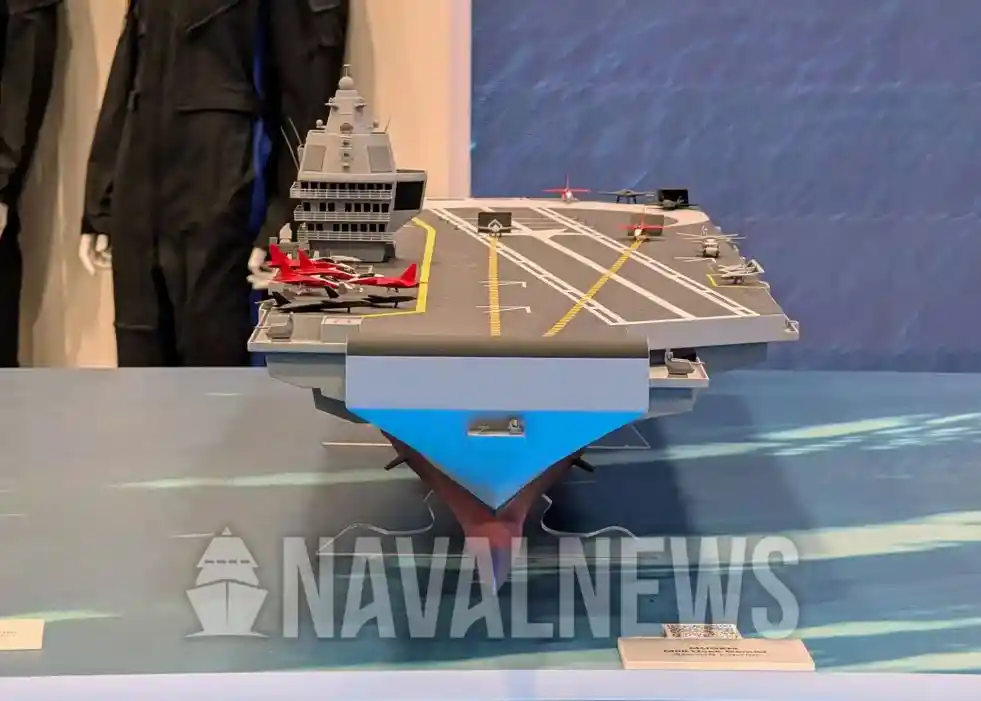
MUGEM is expected to become the largest warship ever built in Türkiye and the centrepiece of the Turkish Navy's future power-projection capability.
Current concepts envision the operation of a mix of crewed and uncrewed aircraft, including HÜRJET, Bayraktar TB3, KIZILELMA and ANKA-3. Combined with its indigenous combat systems and planned unmanned maritime capabilities, the carrier represents one of the most ambitious defence programmes currently underway in Türkiye.
Beyond the newly disclosed 2032 delivery target, the presentation offered the clearest public indication yet of what the Turkish Navy's future flagship is intended to become: a carrier built around indigenous systems and designed to command crewed and uncrewed operations across multiple domains.
Author: Özgür Ekşi