Reaching $2.72 trillion in 2024, global defence expenditure pushed Türkiye up to 17th place, surpassing Spain in an escalating worldwide weapons race.
Turkiye has climbed two positions in the world defence spending hierarchy, exceeding Spain to be the 17th highest military spender in 2024 as global military expenditure hits all-time highs, according to the Stockholm International Peace Research Institute (SIPRI). This increase shows Turkiye's deliberate placement within a fast escalating worldwide armaments competition rather than a passive reaction to outside dangers.
Historic levels of global defence expenditure
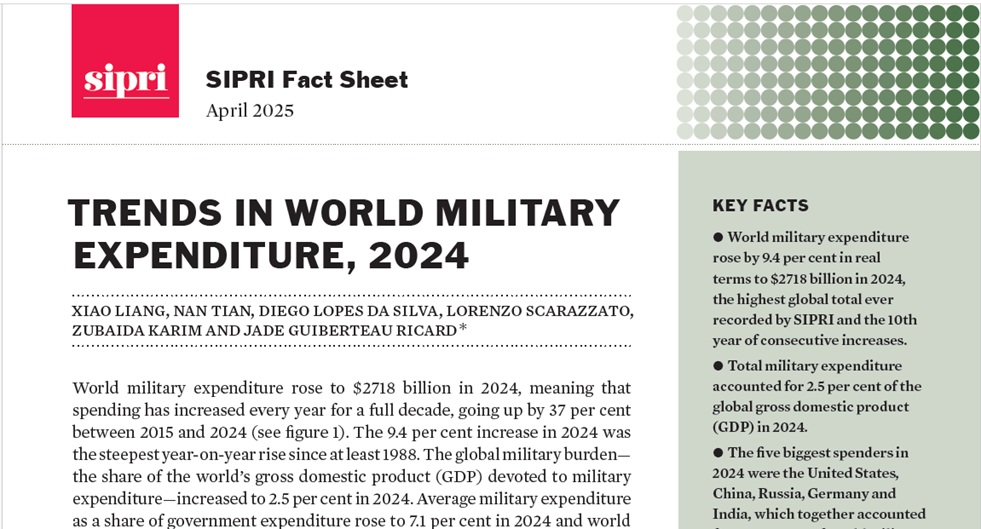
SIPRI's 2024 report shows that in real terms worldwide military spending climbed by 9.4% to $2.72 trillion—the highest yearly rise since the conclusion of the Cold War. Worldwide growth for eight years running and a 37 per cent rise since 2015.
For the second year running, all five main continents—Europe, Asia and Oceania, the Americas, the Middle East, and Africa—reported simultaneous increases in military expenditure. Ongoing conflicts such as the Russia–Ukraine war and the war in Gaza as well as persistent East Asian tensions are major contributors to this rise.
With rising momentum, Turkiye reaches the top 20
In 2024, Turkiye's military budget climbed by 12%, reaching $25 billion. Surpassing Spain in the process, this rise lifted Turkiye from 19th to 17th in SIPRI's global ranking of military spenders.
Now 1.9% of its GDP, Turkiye's defence expenditure is only below NATO's 2% recommendation but reflects a consistent increase.
In actual terms, Turkiye's military spending has grown by 110% during the past ten years.
This reflects both strategic necessity and a deliberate policy to reduce foreign dependency through domestic defence industry development and increased export capacity.
Strategic positioning within a competitive league
Turkiye’s climb in the rankings is not merely a statistical adjustment but a signal of strategic positioning within its defence peer group. While some countries maintain or slightly increase spending, Turkiye’s consistent upward trajectory ensures it does not fall behind in a competitive and heavily armed regional landscape.
Remaining static in such a climate would mean falling behind. Turkiye’s rise in the rankings amid record global spending shows that it is not only maintaining its place, but advancing its role in the global defence order. Nations such as Spain and Canada, which Turkiye has now overtaken, have seen either stagnant or modest increases.
NATO spending expands but Turkiye still below 2% mark
In 2024, NATO’s 32 members collectively spent $1.506 trillion on defence—55 per cent of the global total. Notably, 18 members met or exceeded the alliance’s guideline of spending 2 per cent of GDP on the military, up from 11 in 2023. Turkiye, at 1.9 per cent, narrowly missed the mark but is edging closer year by year.
Several NATO members, such as Poland and Romania, have accelerated spending dramatically. Poland reached 4.2 per cent of GDP—highest among European NATO members—while Romania increased its budget by 43 per cent. Turkiye’s more moderate increase reflects its strategic balancing between economic constraints and regional defence priorities.
Leading spenders maintain dominance
The United States remained the top defence spender at $997 billion, accounting for 37 per cent of the global total. China followed with $314 billion and Russia with $149 billion—both registering substantial year-on-year increases. These three nations alone made up over half of all global military expenditure.
Israel posted the highest relative increase among top 15 spenders (+65 per cent), while Ukraine’s spending remained intense at $64.7 billion, representing 34 per cent of its GDP—the highest military burden in the world.
Arms race returns to the forefront of global security
SIPRI’s findings indicate a renewed global emphasis on military capabilities, not only in conflict zones but also among stable economies seeking strategic autonomy. Europe’s military spending surpassed Cold War levels, growing by 17 per cent in 2024 to reach $693 billion.
Germany’s budget reached $88.5 billion, France $64.7 billion, and the UK $81.8 billion. Sweden, now a full NATO member, increased its spending by 34 per cent, reaching the 2 per cent GDP target for the first time.
Financial and political implications
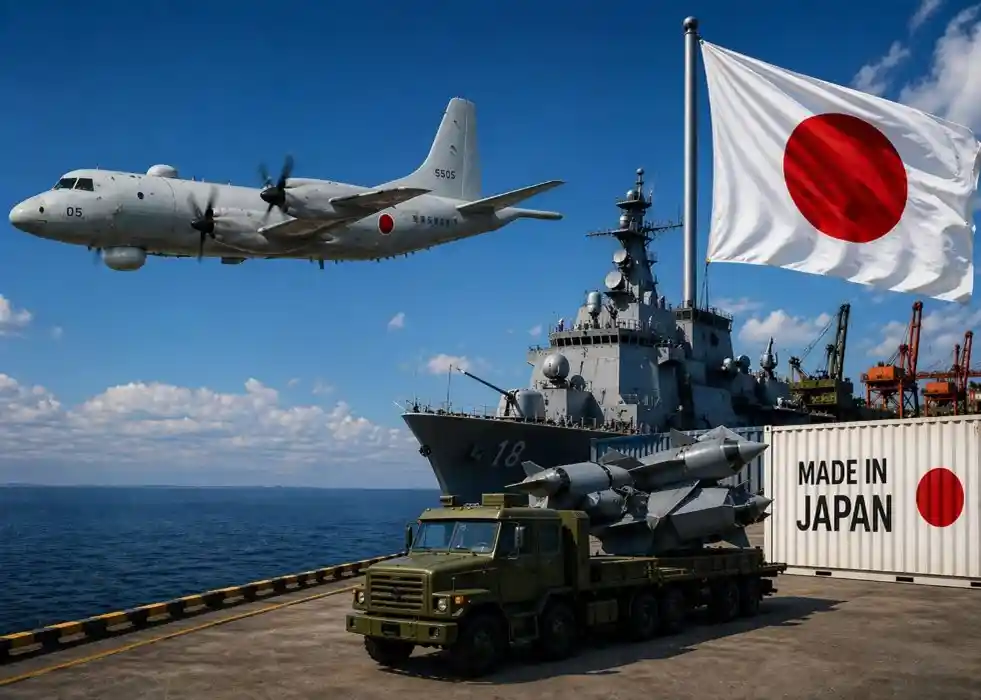
While military spending offers short-term strategic returns, SIPRI warns of long-term economic risks. Many countries have resorted to extra-budgetary funding, tax increases, or borrowing. France is exploring private savings mechanisms, Germany is planning to loosen fiscal rules, and Japan has already approved tax hikes.
Redirecting public funds from social services to defence could lead to political pushback and widen inequality—issues that will shape the future of global defence policy.
Turkiye’s outlook
Turkiye’s rise in SIPRI’s ranking demonstrates its continued investment in strategic deterrence, power projection, and defence self-sufficiency. With robust growth in its domestic defence industry, especially in UAVs, naval platforms, and missile systems, Turkiye is not only expanding its military budget but also transforming how it spends.
As geopolitical instability persists, Turkiye is poised to strengthen its regional role—not by default, but through deliberate upward movement in a world where standing still means falling behind.
Author : Özgür Ekşi